


“If we compare with other European countries, Portugal does not have the same salaries, here they are lower, but people chose to stay here because they felt safe, they could bring their families, build a life here and obtain citizenship, but now it seems that none of this will happen,” the head of Casa da India, Shiv Kumar Singh, told Lusa.
The association leader is one of five representatives of immigrant communities on the National Council for Migration and Asylum (CNMA), a body that was not notified by the government of the draft bills, the first legal initiatives presented by the government, which extend the deadlines for obtaining nationality, allow the withdrawal of citizenship from naturalised citizens and impose limits on family reunification.
“The five councillors were democratically elected and the government ignored us,” lamented Shiv Kumar Singh, who complains about the discourse surrounding the regulation of entry rather than integration measures.
For the head of the Casa da India association, “the [Indian] community agrees that there must be respect for the law and that the law must be in favour of everyone. Changing these rules is creating panic among people who had plans, wanted to stay here and now feel unwanted” by the Portuguese government.
“We are in favour of regulated and organised immigration, but in our view these measures are unilateral and do not help the country,” he said, accusing the executive of creating discretionary rules by setting different residence periods for access to Portuguese nationality (seven years for a residence permit for Portuguese speakers and ten years for others).
Shiv Kumar Singh said that “the government says it has a humanist approach, but it has created classes among human beings”. The extension of the deadlines for applying for nationality is one of the main complaints, as the current law allows access to those who have completed five years after applying for a residence permit.
Alam Kazoi, leader of the Bangladeshi Community in Porto, said that “people are concerned about this return to the past”, referring to the fact that the government’s proposals date back to 2007.
Immigrants thought they would be able to obtain nationality more quickly and many came here, even though they knew that Portugal pays poorly,” he recalled.
And in many cases, the request for nationality has nothing to do with the desire to leave Portugal, but because “the bureaucracy for immigrants is impossible”.
“People are worried because nothing works, there are no visa renewals, there is no response from AIMA [Agency for Integration, Migration and Asylum] and obtaining nationality would mean putting an end to bureaucracy,” because “it is possible to renew a citizen card in a few days.”
Today, “many are stuck in Portugal and cannot go home to see their families because their documents have expired” due to the lack of response from AIMA, Kazoi claimed. The Portuguese government has extended the validity of immigrants’ documents, but this decision is not always accepted by the authorities in other countries.
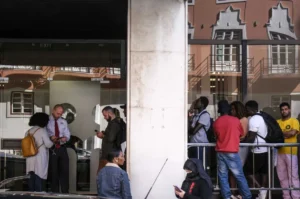
The extension of the deadlines for applying for nationality is one of the main complaints, as the current law allows access to those who have completed five years after applying for a residence permit.
Added to these problems is the government’s proposal to introduce a new deadline for family reunification, which would require a minimum period of two years with a residence permit before family members can apply to come to Portugal.
Despite promises, AIMA has not offered any vacant slots for family reunification for two years, which means that most immigrants are male and are in Portugal without their families, creating problems of integration and social inclusion.
“People came here, they were expecting something, and then they do this. It seems they don’t like immigrants,” said the Bangladeshi community leader.
Platform with Lusa
