

– What measures would you like to see implemented in the banking sector by the new Executive?
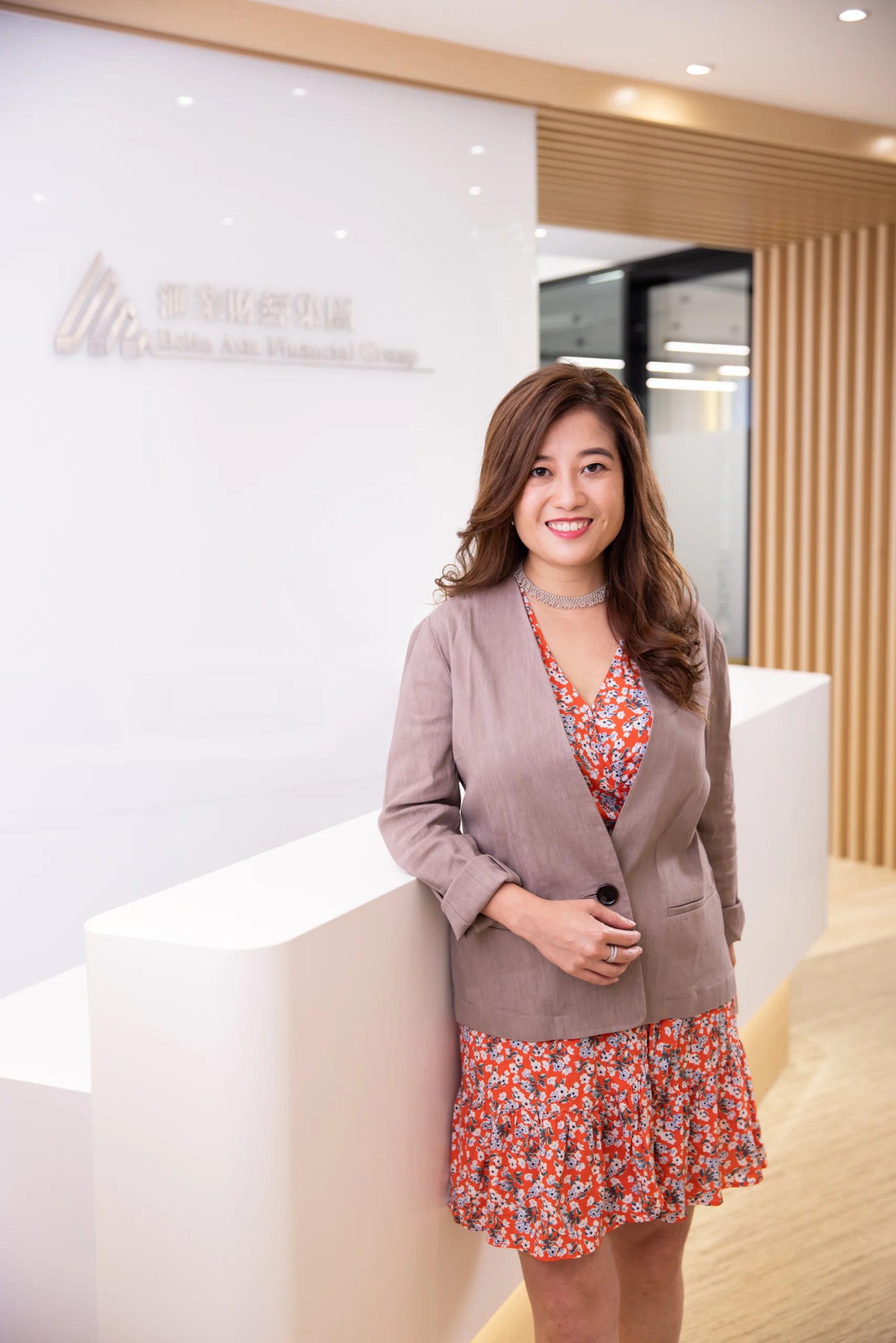
Au Lai Chong – The banking system, the financial industry, and banks are an integral part of the economy. Overall, Macau’s economy is performing well due to gaming and entertainment, but it is unclear whether that wealth has reached SMEs and residents. Not only the Government but also banks must find ways to build an ecosystem that supports the economy and business environment beyond the focus on entertainment and gaming. The Government rightly speaks about the need to diversify the economy, and I believe financial institutions, including banks, will be very important in that process. Another issue is the shortage of professional talent. Macau has only about 700,000 people, and if we want to improve the financial system—and if the Government wants to support banks in diversifying the economy—we need to attract more talent to Macau.
– Since you operate in both Hong Kong and Macau, what do you see on the other side that could also be implemented here?
A.L.C. – Immigration in Hong Kong is very simple and accessible. It is important to protect Macau residents, but we also need to allow space for other talents and professionals to enter easily, supporting other businesses and bringing new experiences and ideas to Macau. When gaming was liberalized, there was a significant influx of specialists and industry professionals, which made a big difference in Macau’s entertainment sector. We could learn from that.
– How do you assess Delta Asia’s performance, and what are the plans for 2025?
A.L.C. – Delta Asia is a family-owned bank that will celebrate its 90th anniversary in 2025, and we have big plans for this year. In 2024, we focused on improving our business and saw an increase in commission revenue. We project solid long-term growth despite challenges in the real estate sector and the macroeconomic environment. There is a lot of global uncertainty, with developments in the United States and Europe, as well as the war in Ukraine; however, we remain optimistic about banking in Macau. Last year, we established a partnership with Manulife to offer bancassurance and business services, integrating this insurer’s offerings with those of China Life. Our goal is to provide our clients with global solutions, which is why we also launched a private banking service last year. This year, the focus is on enhancing customer service because we believe that is how we can differentiate ourselves from other banks—by offering a personalized service and ensuring the best interests of our clients.
– The Monetary Authority of Macau recently revealed record-high levels of bad debt over the past 20 years. What measures have been taken to reduce exposure risk?
A.L.C. – There are two key aspects: first, regarding loans, we are focusing on their quality and supporting the businesses that took them out. We will also adopt stricter credit criteria and ensure that borrowers’ cash flow and business strategies are strong. Meanwhile, the Chinese Government is supporting the real estate sector, and the Macau Government has provided guidance in this field. Additionally, we are diversifying our business and trying to offer different services—as I mentioned earlier—so that the bank is less affected by potential defaults or downturns in the real estate market.
– The Secretary for Economy and Finance has called for flexibility and extended deadlines in debt collection. Are you following this recommendation?
A.L.C. – In our case, we do not issue many mortgage loans; most of our loans are to entrepreneurs and businesses. Therefore, we must ensure that their business continuity is solid and that they have sufficient cash flow. I believe that is more important than property prices. It is not that we ignore them, but for us, they are more of a secondary comfort. As a bank, we never intend to take possession of all the properties linked to loans.
– What new financial products do you plan to launch this year?
A.L.C. – We will focus more on the investment side. In the United States, Donald Trump is encouraging the Federal Reserve to lower interest rates. If that happens, all investors will look for alternatives beyond bank deposits. That is why we offer different mutual funds, bonds, and stocks. Additionally, many of our clients have been with us for so long—since my grandfather’s time—that we recognize the need for succession planning. We provide advisory services in this area, including wealth preservation. Another sector we have identified involves investors from the Mainland who want to invest and expand their businesses in Macau. This is a group of clients we aim to serve with greater dedication.
– The issuance of bonds, which the Government is trying to develop, is an area of interest for you?
A.L.C. – Certainly. It is good to be aligned with Macau’s policies, but we also do it for our own benefit. Many clients seek higher-yield products, and although deposit rates are relatively high, the trend seems to be downward, meaning investors need lower-risk alternatives. As investment advisors, in this climate of uncertainty, it is crucial to guide our clients toward diversifying their portfolios—not just with bonds but also with stocks and alternative investments.
– Macau’s interest rates have followed the U.S. Federal Reserve in recent years. What has been the impact?
A.L.C. – Interest rates and Federal Reserve decisions always impact bond yields. For a bank, one of the main functions is to attract deposits to lend, so the spread is always very important. As long as the spread remains stable, without major drops or increases, it is generally favorable for the bank. At the moment, it depends on the economies of the U.S., Macau, and China, as well as the global economic environment, to determine whether interest rates will actually fall. For now, data shows a strong U.S. economy; there seems to be room for a rate cut, but it remains to be confirmed.
– What are Delta Asia’s plans in the Greater Bay Area and Portuguese-speaking countries?
A.L.C. – The Greater Bay Area is something we are focused on. We opened an office in Guangzhou and believe in a strong connection between our services in Guangzhou, Macau, and Hong Kong. We see many opportunities in the Greater Bay Area. We like Guangzhou because it is similar to Hong Kong and Macau: there is significant accumulated capital, and in comparative terms, the economy remains quite strong. We can benefit from wealth management in the region, helping clients in the Greater Bay Area explore new opportunities. Regarding Portuguese-speaking countries, we have been in discussions with various clients and identified a need for business expansion. There are great opportunities in Portugal, as well as in South America and Africa, where the main languages are Portuguese and Spanish.
– Are you already collaborating with banks and institutions in Portugal and South America?
A.L.C. – We have a strong partnership in Hong Kong within the Portuguese-speaking business world. We are also exploring different partnerships to strengthen this connection. Our goal is to provide a complete solution for Greater Bay Area entrepreneurs, allowing them to expand their businesses into new markets.
