

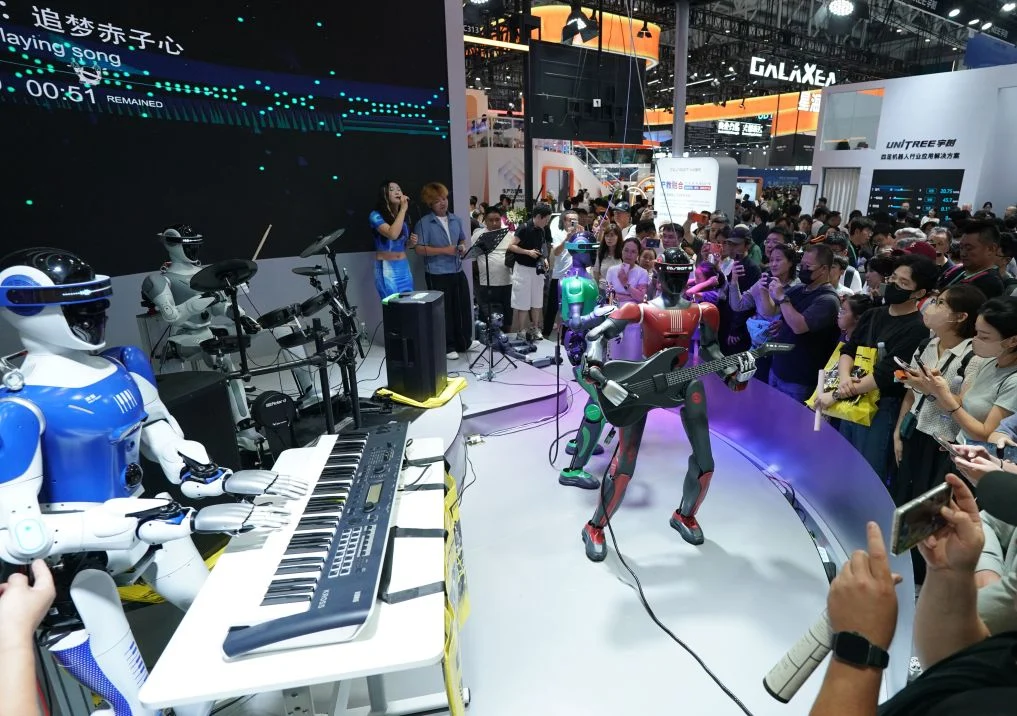
The rapid evolution of robotic technology was on full display in Beijing as the second World Humanoid Robot Games drew hundreds of international competitors and spectators to the city’s National Speed Skating Oval, CBS News reports.
Featuring over 2,000 humanoid units representing dozens of international teams, the multi-day event showcased significant physical milestones, including a sprint performance that surpassed human world-record times in the 100-meter dash alongside athletic competitions ranging from gymnastics to martial arts.
While many demonstrations highlighted the practical potential of artificial intelligence and advanced robotics for everyday civilian tasks, such as domestic assistance and industrial service, the physical capabilities on display also fueled ongoing discussions regarding military applications.
Read more about this topic: China: Humanoid robots break Usain Bolt’s 100m sprint record (with video)
Industry experts and robotics engineers attending the event noted that the underlying hardware and movement systems are progressing at an accelerated pace, estimating that battlefield-ready humanoid units could become a reality within the next five to ten years.
Engineers emphasized that while current consumer-oriented designs are built to improve daily productivity and assist in hazardous environments, the long-term trajectory of the technology points toward defense integration and deterrence strategies. Development in these sectors aligns with broader national initiatives in China aimed at securing global leadership in artificial intelligence, automation, and advanced manufacturing.
Despite the impressive demonstrations of speed, balance, and agility, the event also underscored the current technical limitations of complex autonomous hardware. Several competing units suffered mechanical failures, balance errors, and system overheating during high-intensity obstacles, demonstrating that significant engineering hurdles remain before widespread commercial or tactical deployment can be fully realized.
