

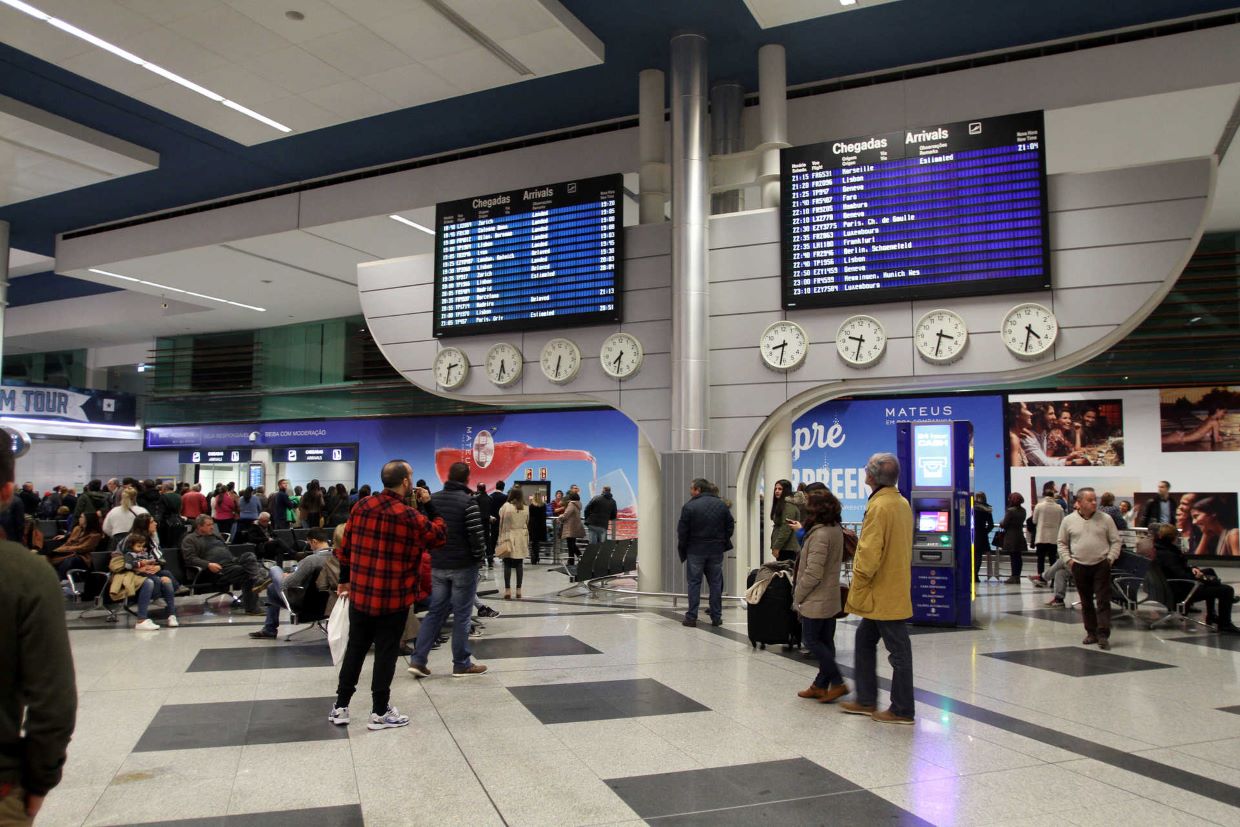
Portugal, alongside seven other European Union member states and Switzerland, has formally requested that the European Commission extend a temporary contingency mechanism for the Schengen area’s new Entry/Exit System (EES) beyond its current September deadline, citing intense pressure at border checkpoints.
In a joint letter addressed to European Commissioner for Home Affairs Magnus Brunner, Portuguese Minister of Internal Administration Luís Neves and his counterparts from Belgium, France, Germany, Greece, Italy, Malta, the Netherlands, and Switzerland voiced shared anxieties.
“The scheduled end of the partial suspension mechanism on September 6 is a cause for serious and legitimate concern, shared not only by several member states, regardless of their level of readiness, but also by the entire transport sector,” the ministers wrote in the letter.
The mechanism in question acts as a safety valve. In the event of system outages or technical failures, it allows border authorities to temporarily revert to alternative procedures—such as manual data logging and traditional passport stamping—until normal digital operations resume.
Read more: Portugal: passengers at airports hit new record in April
The ministers urged the Commission to provide “concrete written guarantees regarding this specific flexibility” before the September 6, 2026 cut-off date to safeguard public order amid exceptional circumstances.
Despite the plea for flexibility, the signatory countries emphasized that they remain “fully committed to the comprehensive implementation of the Entry/Exit System, which is essential for improving border management and strengthening the security of the Schengen area.”
However, they noted that the first eight months of using the digital infrastructure have yielded critical lessons. “The experience gained to date has demonstrated that significant difficulties can arise under exceptional circumstances, and these risks should not be underestimated,” the letter stated.
The warning comes at a time of peak operational pressure driven by peak summer tourism. The EES, which registers non-EU citizens electronically via biometric and digital logs rather than manual ink stamps, was launched in October 2025 and reached full implementation in April 2026.
Read more about this topic: Chaos, queues and friction: EU Entry/Exit System (EES) faces criticism at airport gates
The practical rollout has faced considerable headwinds, particularly in Portugal. Passengers at national airports, especially in Lisbon, have faced prolonged wait times at passport control over recent months. Local authorities have attributed the gridlock to the learning curve of the new system combined with a shortage of technical equipment and personnel.
To combat the summer airport delays, the Portuguese government recently deployed additional border agents, established new document verification checkpoints, and installed extra electronic gates (e-gates) across major national airports. The joint letter references these interventions as “significant progress” but maintains that the option to use the partial suspension fallback remains necessary and would only be triggered when “duly justified.”
The concerns of the European ministers mirror mounting pushback from the private sector. European airline and airport trade associations have previously appealed to the European Commission to temporarily pause the border control system during the high-density summer travel season, warning of “unsustainable pressure” on ground operations.
Responding to the industry appeals, Commissioner Brunner assured stakeholders that the European Commission intends to “redouble efforts to assist member states that continue to face difficulties,” though specific regulatory adjustments have yet to be detailed.
