

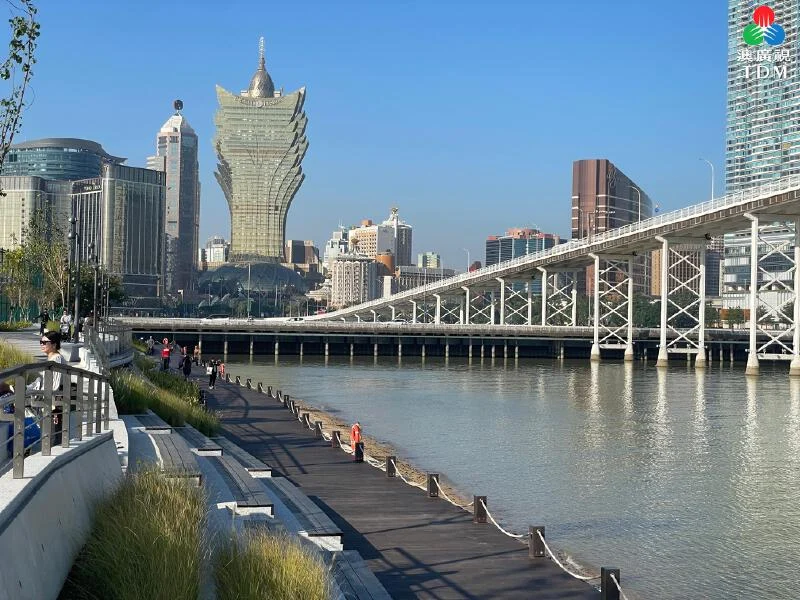
The United States will not send high-level representatives to an Asia-Pacific Economic Cooperation (APEC) ministerial meeting taking place in Macau this week. The boycott is a direct response to travel restrictions imposed by Beijing, which Washington says severely limit its ability to provide emergency consular assistance to American citizens in the territory.
The 13th APEC Tourism Ministerial Meeting and the 67th APEC Tourism Working Group Meeting are being held in Macau from June 24 to 28, bringing together more than 200 leaders to discuss sustainable tourism.
In an official media note released on Wednesday, the U.S. Department of State emphasized that “the safety and security of Americans is a top priority” for the Trump administration. It noted that Washington maintains a Level 3 “Reconsider Travel” advisory for the territory due to the structural barriers placed on diplomatic staff based at the U.S. Consulate General in Hong Kong and Macau.
According to U.S. authorities, the Ministry of Foreign Affairs of the People’s Republic of China (PRC) requires all U.S. diplomatic personnel—including those officially accredited to Macau—to apply for and secure specialized visas before entering the Special Administrative Region, even during a critical emergency.
Read more about this topic: APEC China CEO Forum to Open Alongside China International Supply Chain Expo, Boosting Asia-Pacific Cooperation
“Approval takes at least five to seven days, significantly limiting the ability to offer timely consular services,” the Department of State detailed.
Washington stated it had repeatedly asked Beijing to lift these “arbitrary and targeted” visa requirements. A compromise proposed by the U.S. when China decided to host the tourism-focused APEC summit was ultimately rejected by Chinese authorities.
“As a matter of principle, the United States will not send high-level participants to a Ministerial promoting tourism in a location where U.S. diplomats cannot provide emergency services to U.S. tourists in need,” the Department of State declared. The decision highlights the ongoing diplomatic friction between Washington and Beijing, despite stated efforts to build a relationship of “strategic stability” based on fairness and reciprocity.
Due to these operational bottlenecks, Macau currently carries a higher U.S. travel advisory level than Hong Kong (Level 2), matching the warning level applied to mainland China.
Washington has previously warned travelers that the “arbitrary enforcement of local laws increases legal uncertainty for visitors” across mainland China, Hong Kong, and Macau. Additional complexities exist for individuals with dual nationality or Chinese heritage:
Read more: China’s hosting of APEC meeting to boost regional cooperation
Non-Recognition of Dual Status: The Macau SAR Government does not legally recognize dual citizenship.
Targeted Scrutiny: Dual U.S.-PRC citizens and American citizens of Chinese descent may be subjected to heightened bureaucratic scrutiny or systematic harassment.
Consular Access Denials: Under bilateral agreements, if a dual citizen enters Macau on a U.S. passport and is detained, PRC authorities are legally obligated to notify the U.S. Embassy or Consulate and grant access. However, the State Department warns that “in practice… U.S. consular officers may be prevented from providing assistance,” even if the individual entered using American documentation.
APEC is a massive regional economic bloc consisting of 21 member economies. While the United States, China, and Hong Kong hold full membership status, Macau is not an official member, participating in this week’s forum solely as a designated “guest economy.”
