

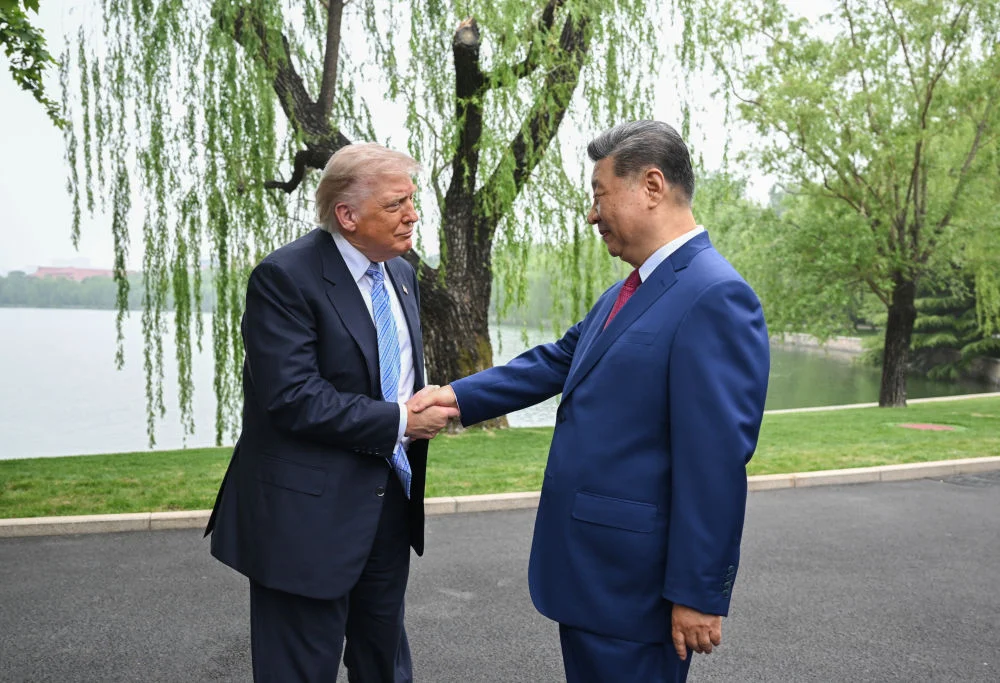
U.S. President Donald Trump announced today that China has agreed to significant purchases of American oil, Boeing aircraft, and soybeans following his high-stakes meeting with President Xi Jinping in Beijing. Speaking to Fox News, the Republican leader framed the agreements as a major victory for American industry and agriculture, particularly amid ongoing global energy instability.
“One thing I think we’re going to agree on is that they agreed to buy oil from the United States,” Trump declared. He detailed plans for Chinese vessels to dock in Texas, Louisiana, and Alaska to begin transporting crude, a move intended to shift China’s energy dependency toward American markets.
The President also revealed a substantial deal for the aerospace sector, stating that China will purchase 200 commercial aircraft from Boeing. This announcement came after meetings involving Boeing CEO Kelly Ortberg, who was part of the official U.S. business delegation. While market analysts and Boeing leadership had hoped for a figure closer to 500, Trump characterized the 200-plane commitment as a “huge” win for American jobs.
Regarding the agricultural sector, Trump promised that Chinese investment in U.S. soybeans would be “greater than ever before.” This focus on soybeans is a strategic move to shore up support and economic stability for farmers in the American Midwest, who have historically been caught in the crossfire of trade tensions between the two superpowers.
Read more about this topic: Xi-Trump reach consensus on Hormuz and Iran nuclear power (with videos)
The announcement precedes a rare and symbolic lunch scheduled for today at Zhongnanhai, the leadership compound adjacent to the Forbidden City. As the headquarters for the Communist Party of China, the complex rarely opens its doors to foreign dignitaries, making Trump’s invitation a significant gesture of diplomatic proximity.
This 48-hour state visit marks Trump’s first trip to China since returning to the White House in January 2025. Beyond trade, the discussions touched on critical global security issues, specifically the ongoing Iranian blockade of the Strait of Hormuz.
The Strait of Hormuz has been under military threat for six weeks following the outbreak of conflict involving the U.S. and Israel on February 28. Trump claimed that President Xi expressed a willingness to help broker a resolution to reopen the strategic waterway.
“President Xi would like to see a deal. He said, ‘If I can help in any way, I’d be happy to help,’” Trump noted. China remains the primary importer of Iranian oil, giving Beijing unique leverage in negotiations with Tehran to stabilize global energy routes.
