

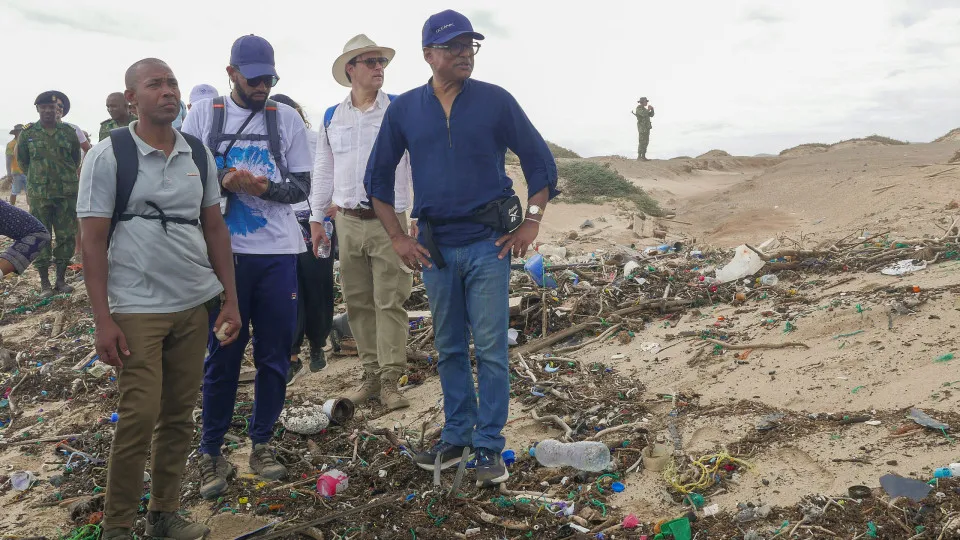
The President of Cape Verde, José Maria Neves, will launch an international debate on the impact of tons of plastic accumulated on the island of Santa Luzia due to marine pollution, he announced during a visit on Saturday to the environmental reserve.
José Maria Neves said he intends to “debate the issue, bring it into the public agenda” and “mobilize international partners” at the 5th Ocean Decade Conference, to be held in July on the island of Boa Vista.
The Ocean Decade is a global initiative led by the UNESCO, and the head of state is one of its patrons.
At the same time, as leader within the African Union (AU) for natural and cultural heritage, José Maria Neves will present the issue to the organization and “to countries in the region, raising awareness about marine litter and the need to preserve this extraordinary natural resource, the sea.”
Read more: Expedition to analyse Greenland ice melt will last around two months
Cape Verde’s future “is the sea,” which must be viewed as a “strategic resource,” he emphasized.
Most of the plastic covering the uninhabited island north of the archipelago, about 10 kilometers east of São Vicente, consists of industrial fishing nets and equipment from other countries, carried by ocean currents and forming a vast blanket across the northern beach.
“We will organize an event to bring together all partners, NGOs, authorities, and fishing operators to discuss ways to collect, transport, and recycle this plastic,” the president said.
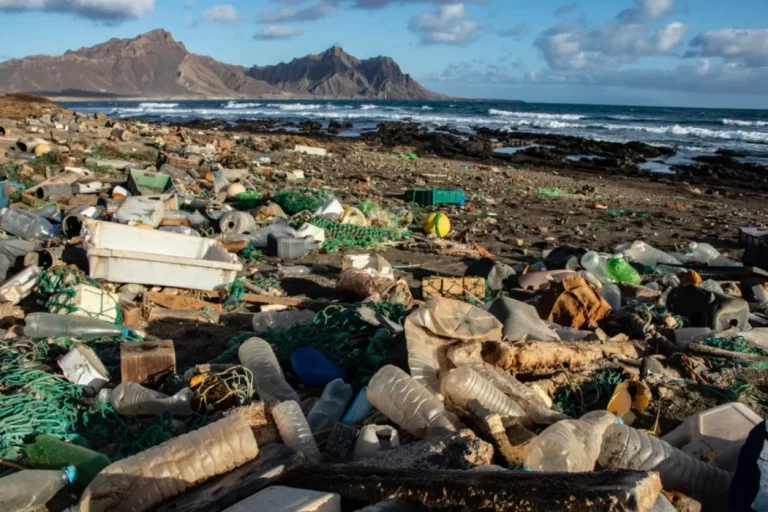
Photo: Justin Carrette/Reporterre
According to José Maria Neves, it is also necessary to “address these issues within the framework of the West African fisheries commission and in negotiations of fishing agreements, particularly with the European Union.”
“I will also prepare a message for coastal countries to raise awareness, especially about waste originating from regional fishing industries,” he added.
Read more: Cape Verde: World Bank approves additional €34.7 million after storms
The mission to Santa Luzia lasted all Saturday and included a delegation of diplomats, business representatives, and NGOs visiting the untouched island, where accumulated waste is the only visible sign of human presence — aside from the camp of the NGO Biosfera, whose members acted as guides.
The NGO maintains teams on the island between June and October to protect thousands of sea turtles during nesting season. Santa Luzia is a globally important nesting site.
Before each season, Biosfera brings together 100 to 150 volunteers, who rotate over four to five weeks to clean surface waste and reduce deaths of adult turtles and hatchlings trapped in fishing nets.
However, no solution has yet been found to remove the plastic stored on the island in large improvised enclosures, accumulated over the past 15 years.
“We hope that visits like this will draw attention to the problems we face here,” said Tommy Melo, co-founder of Biosfera, while showing the waste deposits collected over the years.
Read more: Cape Verde: “There is a domestic travel market with unmet demand”
According to him, “there is a major environmental impact on turtles,” because in addition to surface waste, there is debris buried in the الرمال, increasing risks for nesting.
At times, “nets arrive on the beach with dead marine animals, because a net can take decades to break down and continues ‘ghost fishing’ in the ocean,” he explained.
Tommy Melo estimates that between 700 and 800 tons of collected waste are currently accumulated on the island, with an additional 70 tons gathered each year during cleanup campaigns.
“We are shocked by the amount of waste that arrives here,” said Patrícia Portela de Souza, the United Nations resident coordinator in Cape Verde, who joined the delegation.
UN agencies and funds support various environmental protection projects in the archipelago.
According to her, the situation points to a global discussion on “how to work more collaboratively with nations to prevent this waste from being dumped into the ocean.”
“I believe that is the first discussion: there must be a strong agreement to prevent more waste from entering the sea,” she concluded.
