

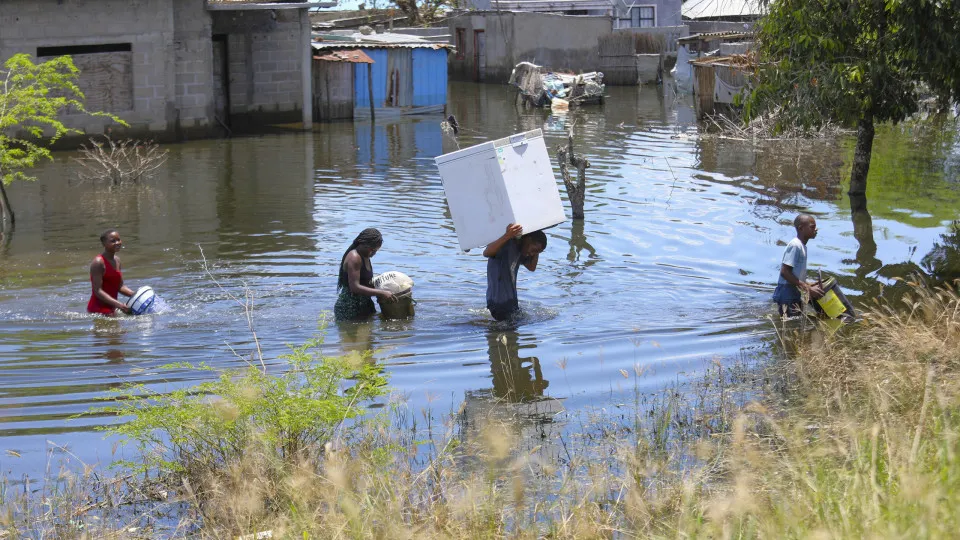
Mozambican authorities today called for the evacuation of populations in low-lying areas in the provinces of Inhambane, Gaza and Sofala, in anticipation of a second wave of flooding.
“We wanted to reinforce the appeals we have always been making for people to leave low-lying areas, particularly those in the provinces we mentioned, so that they are alert and move out of those areas,” said Luísa Meque, president of the National Disaster Risk Management Institute (INGD).
Meque said authorities have already identified sites to shelter populations should accommodation centres need to be opened in affected areas, and that technical and multidisciplinary teams are mobilised in Inhambane and Gaza in the south and Sofala in the centre of the country to monitor the situation and strengthen flood prevention measures.
The death toll in the current rainy season has risen to 279, with nearly 900,000 people affected since October, according to a new INGD update. The latest figures count 892,273 people affected — 22,000 more than the previous tally — corresponding to 205,479 families, with 11 missing and 340 injured.
Read more about this topic: Floods: Mozambique needs €60 million to restore rain-damaged roads
January’s floods alone caused at least 43 deaths, 147 injuries and nine disappearances, affecting 715,716 people. Cyclone Gezani’s passage through Inhambane on February 13-14 caused four more deaths and affected 9,040 people.
A total of 15,898 homes were partially destroyed, 6,305 totally destroyed and 187,262 flooded this rainy season, while 303 health units, 84 places of worship and 722 schools have been affected over five and a half months. Some 267,205 hectares of agricultural land have been lost, affecting 342,227 farmers, and 531,058 animals — cattle, goats and poultry — have died. Road infrastructure losses include 7,612 kilometres of roads, 45 bridges and 261 culverts.
Since October, 155 accommodation centres have been activated, having sheltered up to 114,734 people, with 25 still active — five more than last week due to recent flooding — currently housing at least 6,760 people, in addition to 6,931 people who required rescue.
