

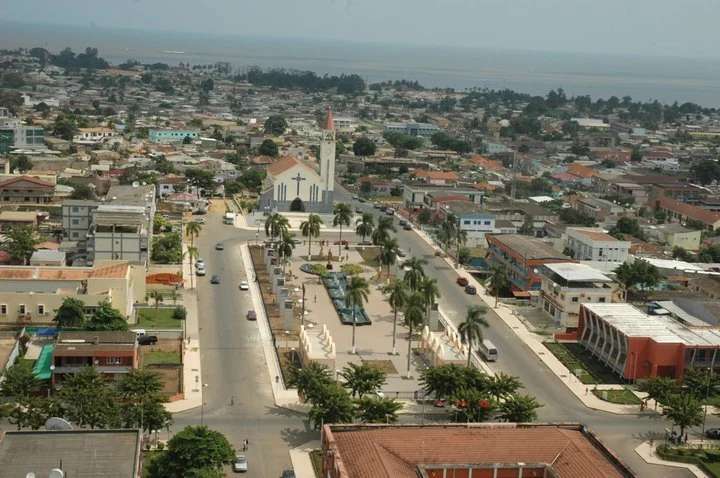
The province of Luanda led national production for GDP in 2024, contributing 32.2 trillion kwanzas (€30.4 billion), according to the National Statistics Institute (INE).
INE published, for the first time, data on provincial GDP — which measures the generation of national wealth by province — covering the period between 2015 and 2024.
The data show that GDP at current prices rose from 15.8 trillion kwanzas (€13.8 billion) in 2015 to 104 trillion kwanzas (€96.1 billion) in 2024.
In 2024, after Luanda, the provinces of Zaire and Benguela recorded the highest production levels, with 18.4 trillion kwanzas (€17 billion) and 7.8 trillion kwanzas (€7.2 billion) respectively, representing shares of 17.71% and 7.53% of total GDP.
Over the reference period, Luanda’s contribution grew from 5.7 trillion kwanzas (€5.2 billion) in 2015 to 32.2 trillion kwanzas (€30.4 billion) in 2024.
The provinces with the lowest production were Cuando Cubango (0.61%), Cunene (0.80%) and Namibe (1.21%).
“Real GDP growth in 2024 was 4.95%. The provinces with the highest growth rates were Benguela (33.14%), Namibe (18.27%) and Bié (8.73%). Conversely, economic contraction was recorded in the provinces of Cunene at 5.09%, Lunda Sul at 6.20% and Cuando Cubango at 12.82%,” INE’s report reads.
Regarding per capita GDP distribution by province, Zaire, Cabinda and Cuanza Norte recorded income per inhabitant of 26,979.50 kwanzas (€24.90), 5,749.42 kwanzas (€5.30) and 3,585.54 kwanzas (€3.30) respectively. The provinces of Huíla, Cuando Cubango and Cunene offered the lowest income per inhabitant.
In terms of economic sectors, Luanda and Benguela stood out in services, while Zaire led in industry.
Read more about this topic: Angola’s economy grew 5.7% in the fourth quarter of 2025, driven by non-oil activity
This edition of the provincial GDP report, which will be published annually, was drawn up based on Angola’s former political-administrative division, approved in October, which now comprises 21 provinces — three more than under the previous territorial configuration.
According to INE, the provincial GDP “constitutes a strategic step towards strengthening territorial economic analysis,” an exercise that will allow authorities to “assess economic performance, identify regional inequalities, and provide a basis for planning and the formulation of public development policies.”
