

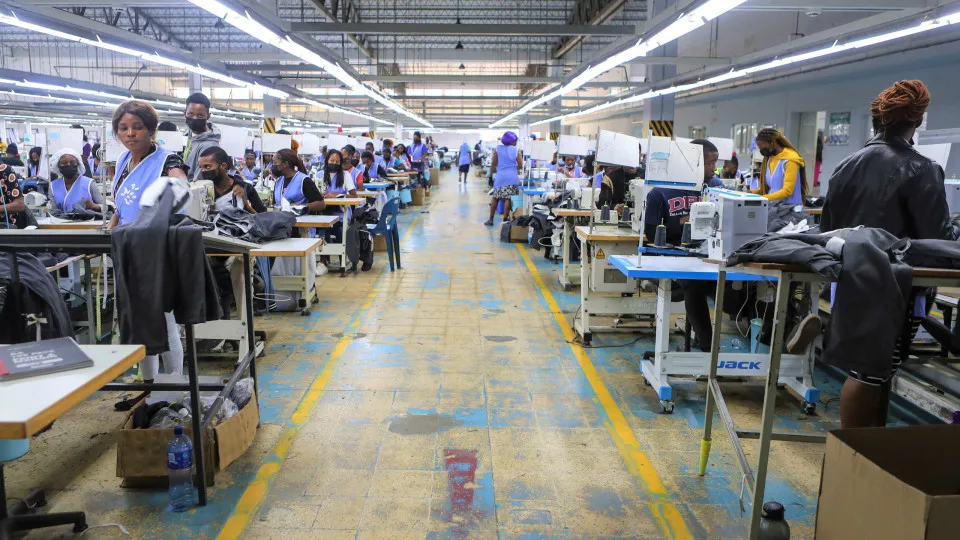
The Mozambican government wants to move away from policies that concentrate growth in the extractive industry, betting instead on productive supply chains, citing the structural weaknesses of the national economy, which is still recovering from a year of contraction.
In a report by the Ministry of Finance on the 2025 budget execution, “a relatively lower current growth trend” in the economy is noted, conveying the need for “robust and consistent economic measures that galvanise the main productive sectors.”
That reading, it adds, “reinforces the need for a more prudent and selective orientation of economic policy, capable of addressing structural weaknesses and avoiding the reproduction of the constraints” identified in recent years.
“Policies that deepen the concentration of growth in primary sectors, especially in the extractive industry, without the proper development of productive supply chains, should be discouraged. Likewise, the expansion of recurrent public expenditure without direct impact on productive capacity, as well as the dispersal of public investment in projects with limited economic effect, proved insufficient to halt the contraction of GDP,” the document reads.
The Mozambican economy recovered in the last quarter of 2025, reversing four consecutive quarters of decline by growing 4.67%, but closed the year with a year-on-year fall of 0.52%, the National Statistics Institute (INE) announced last week.
The economy nonetheless reversed a year of contraction stemming from the violent protests that followed the general elections of October 9, 2024, which over more than five months left 400 people dead and caused widespread destruction of businesses and public infrastructure.
In the third quarter of 2025, according to INE, GDP at market prices fell 0.85% compared to the same period in 2024. Declines were also recorded in the first and second quarters of 2025, of 3.92% and 0.94% respectively, as well as in the fourth quarter of 2024, of 5.68%.
The Mozambican economy is deeply dependent on coal and natural gas extraction, which largely dominate national exports, according to earlier data from the central bank.
Read more: Floods: UN have raised less than 10% of the funds needed to support relief in Mozambique
“On the other hand, policies that compromise macroeconomic stability through fiscal imbalances, inflationary pressures or exchange rate instability tend to worsen the weakening of domestic demand and the retreat of private investment, as evidenced by the unfavourable performance of several branches of the tertiary sector in 2025,” the 2025 budget execution document states.
In the opposite direction, it adds, “economic balance data point to an effective alignment of strategies and policies so as to orient them towards the recovery of the productive base”, with a focus “on manufacturing, energy, construction, agriculture and logistics services — sectors with a strong pull effect on the economy whose performance significantly shaped the overall trajectory of economic activity.”
It also notes that public investment should take on “a more selective and productive character, prioritising critical economic infrastructure and interventions with a high multiplier effect, capable of boosting employment and youth self-employment and stimulating domestic production.”
“At the same time, strengthening support instruments for the private sector, particularly micro, small and medium-sized enterprises, is key to revitalising the domestic market and boosting trade, including the informal sector,” it concludes.
