

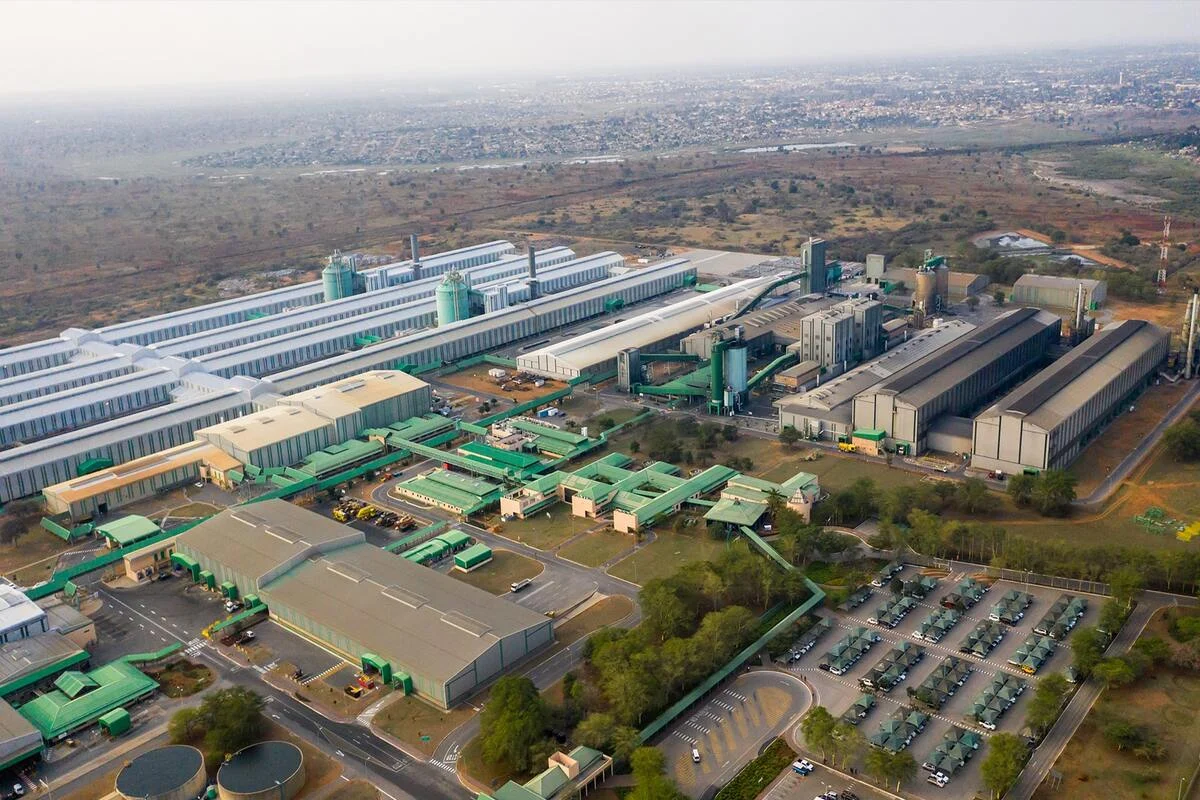
At the Beluluane Industrial Park, Mozambique’s largest industrial hub, companies are reassessing their future as around 40% of industries still provide services to Mozal, Africa’s largest aluminium smelter, which is set to suspend operations on March 15.
The imminent shutdown of Mozal — also Mozambique’s largest industrial employer, with more than 1,000 direct and 4,000 indirect workers — is casting uncertainty over neighboring businesses in the park, located 20 kilometers from Maputo. One such company is Dendustri.
Founded in 2008, Dendustri foresees closing its operations if what it calls a “catastrophe” becomes reality, after investing $12 million (€10 million) in the project. The closure would leave nearly 50 employees unemployed.
“Mozal represents 95% of our income, of our business. Basically, Dendustri exists to serve Mozal. We created another unit that we thought could diversify our risk — precision technology TLC — but we were a bit unlucky because the market is currently very weak and there is little demand for this type of work,” Mohamad Aboubakar, Dendustri’s representative in Mozambique, told Lusa.
With Mozal in the background — where trucks loaded with aluminium continue to depart, at least for now — Dendustri keeps producing anode rods for the neighboring smelter. Like many other companies in the park, it sees no alternative but to close if Mozal suspends activity on March 15, as announced due to the dispute over electricity tariffs.
According to data from MozParks, the entity managing the park, local industries’ dependence on Mozal has been decreasing. As of last August, about 60% of companies no longer provided services to the smelter. In total, more than 60 companies operate in the park, employing around 12,000 people, 8,000 of whom are already outside Mozal’s supply chain.
Nevertheless, concern is widespread. Several companies are calculating potential shutdowns, as Mozal remains their sole client, particularly in heavy industry services. Business owners prefer to remain silent, waiting to see whether the suspension and maintenance regime will indeed be implemented, although Mozal has already begun collective dismissals.
For Dendustri, Mozal’s closure would be more than a temporary halt — it would represent a “catastrophic scenario” for both the national economy and its 48 employees.
Read more: Mozambique companies request easier credit access from the World Bank
“The impact of Mozal’s closure is devastating and catastrophic because it will force us to shut down as well or, at least, adopt the same conservation regime as Mozal,” Aboubakar explained, stressing that the consequences would extend beyond the industrial sector.
While machines continue welding inside its warehouses, Dendustri is still delivering what could be its final services to Mozambique’s largest industry. The company is exploring alternatives to mitigate the impact, hoping domestic industrial demand might provide new opportunities. However, weak demand and Mozambique’s broader economic difficulties make these alternatives hard to realize.
For workers across the industrial park, the future remains uncertain, sustained only by hope that South32 — the Australian company managing Mozal — might reconsider its decision.
“What we are doing is based on what Mozal has communicated to us — proceeding with collective dismissal in accordance with the law and ensuring workers receive all their rights. We have already contacted unions and the Ministry of Labour. Unfortunately, this is beyond our control. Maintaining the workers would mean destroying the company. At this point, we must act while we still have the capacity to compensate them,” Aboubakar said.
Beyond the risk of mass layoffs, Aboubakar warned that Mozal’s exit would reduce national tax revenue and the volume of taxes paid by companies, further shrinking corporate income and impacting public finances.
“In the long term, this could have very serious consequences. Mozal was one of the first megaprojects, and its impact is visible. A new area — Beluluane — was created because of Mozal, as was the Maputo Corridor,” he noted.
Mozal initiated collective dismissal proceedings in February as part of the planned suspension. South32 confirmed that operations will shift to maintenance and conservation mode on March 15 due to the “inability to secure sufficient and affordable electricity supply,” despite government attempts to resolve the tariff dispute.
Mozal purchases nearly half of the electricity produced in Mozambique, primarily from the Cahora Bassa Hydroelectric Plant. On August 18, Mozambican President Daniel Chapo stated that the energy tariffs proposed by Mozal would lead to the hydroelectric plant’s collapse.
South32 has indicated its willingness to pay more under a new contract after the current agreement expires on March 15. However, it argues that the tariffs proposed by Mozambique are “well above” those applied to other energy-intensive smelters in different countries, making the suspension of Mozal’s operations unavoidable.
