

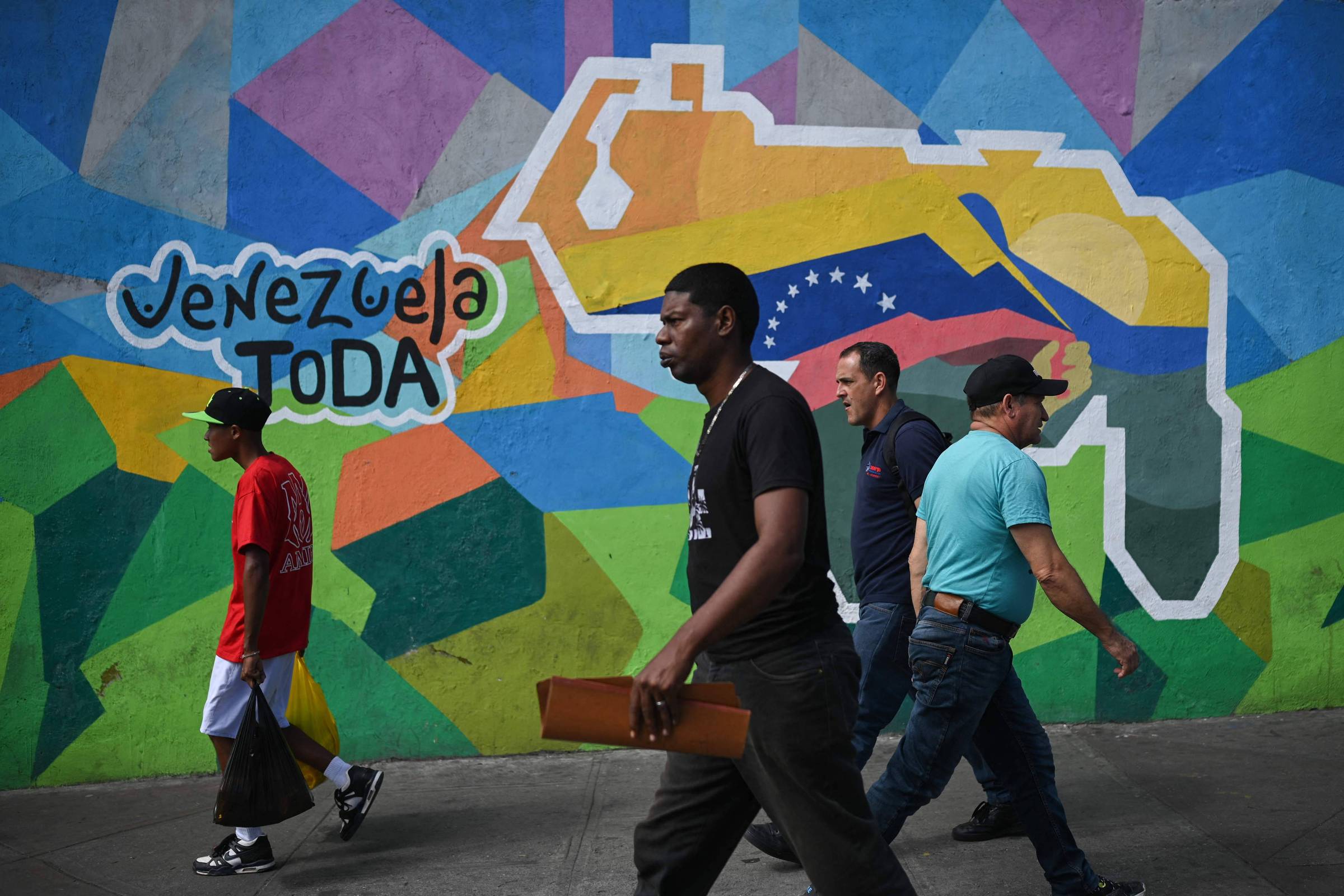
In a surprise attack on Saturday, U.S. forces conducted a precision operation in Venezuela, capturing Venezuelan President Nicolás Maduro and his wife, who were transported to New York. Without providing a timeline for new elections, U.S. President Donald Trump stated that Washington would “take over management” of the country and become a “key presence” in its oil industry.
This action, the most direct U.S. military intervention in the region in nearly 40 years, is viewed as part of a broader strategy to contain China’s presence in Latin America, where Beijing has deepened ties through investments in infrastructure, financial cooperation, and technology.
“The competition between China and the U.S. in third countries, especially in the Western Hemisphere, which Trump values immensely, is likely to become more direct and intense,” said Zhao Minghao, deputy director of the American Studies Center at Fudan University in Shanghai, as quoted by local media.
The academic expects Washington to extend pressure on Beijing beyond economics and trade, impacting technology and security sectors as well. Zhao believes that China’s cooperation under the Belt and Road Initiative could be particularly affected: “It’s not just about infrastructure, but also trade, finance, and strategic relations.”
In recent decades, China has expanded its presence in the region by establishing partnerships with major economies like Brazil and positioning itself as an influential voice in the Global South. However, the new U.S. security strategy underscores its goal of preventing non-Western powers from gaining ground in the Americas, reinstating the principles of the Monroe Doctrine, an external relations policy proclaimed by President James Monroe in 1823.
In recent weeks, several countries have indicated a realignment. Argentina secured a $40 billion aid package from the U.S. after suspending space and telecommunications projects supported by Beijing. Bolivia announced a review of lithium contracts with China and Russia.
The attack on Venezuela has elicited mixed reactions. Chile expressed “deep concern,” Colombia reinforced border security measures, and Brazilian President Luiz Inácio Lula da Silva criticized the U.S. for infringing on Venezuelan sovereignty.
Cui Hongjian, director of European Studies at the Beijing Foreign Studies University, warned of the risks of regional retraction in the face of China. “If Maduro is used as a warning shot, the deterrent effect could be widespread,” he said, adding, “Beijing’s priority is to safeguard investments and relations built over the past years.”
China’s increasing dependence on South America for agricultural supplies, particularly amid the U.S. trade war, may also be impacted. According to analyst Ren Yi, a popular commentator under the pseudonym “Tuzhuxi,” Latin America may become a major focal point of indirect friction between Washington and Beijing in 2026. “The scope for direct confrontation between China and the U.S. may be limited, but competition will increasingly be channeled into third countries,” he wrote.


