

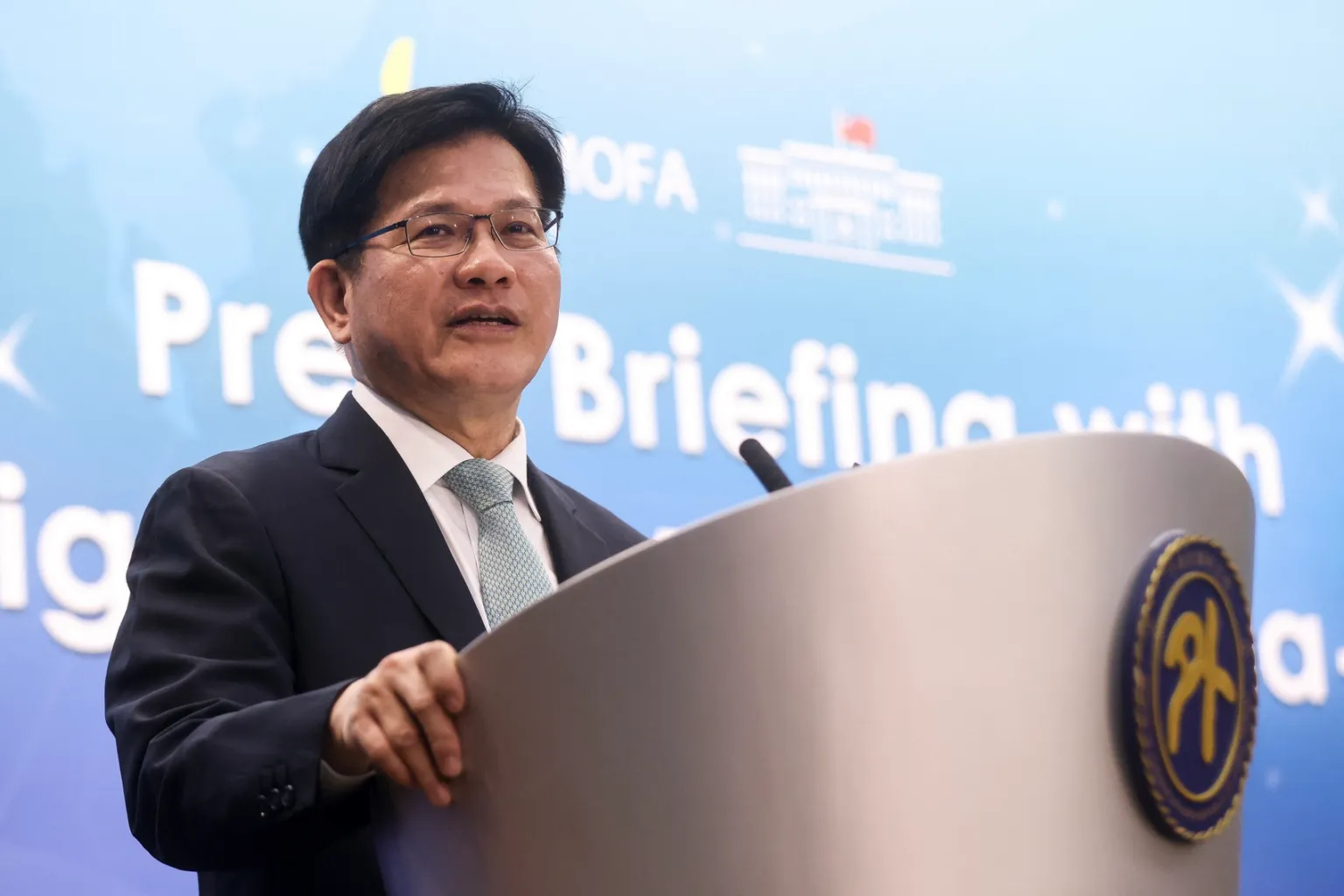
Taiwan’s Foreign Minister, Lin Chia-lung, reaffirmed today his confidence in the “stable development” of relations with Washington ahead of this week’s meeting between the presidents of China and the United States.
“At the invitation of President Xi Jinping, the President of the United States of America, Donald J. Trump, will conduct a state visit to China from May 13 to 15,” the Chinese Ministry of Foreign Affairs stated in a communiqué today.
The visit will be the first by a U.S. President to China since Trump’s trip in 2017 during his first term. it occurs amid numerous bilateral disputes, including issues concerning Taiwan and the South China Sea.
In statements reported by the Taiwanese public news agency CNA, Lin assured that Taipei will “closely monitor” the meeting and maintains “constant communication” with the U.S. Government. The minister noted that Washington has reiterated on “several occasions” that its policy toward Taiwan “will not change.”
Read more about this topic: China urges the U.S. to maintain stability in bilateral relations
Last week, U.S. Secretary of State Marco Rubio indicated that Taiwan “will be a topic of discussion” in the meeting between Xi and Trump.
“We understand that the Chinese understand our position on this issue, and we understand theirs. And I believe both sides—again, without preempting what will happen in the negotiations—understand that it is in neither side’s interest for any destabilizing event to occur in that part of the world,” Rubio said.
Beijing considers Taiwan—which has been autonomously governed since 1949—to be an “inalienable part” of Chinese territory and does not rule out the use of force to gain control. This position is rejected by the Taiwanese Government, which maintains that only the island’s 23 million inhabitants have the right to decide its political future.
For over seven decades, the U.S. has been at the center of the disputes between the two sides. Washington is legally obligated by law to provide Taiwan with the necessary means for its self-defense. Although it does not maintain formal diplomatic relations with the island, it remains a potential defender in the event of a conflict with Beijing.
Read more about this topic: US says China does not plan to invade Taiwan in 2027
At the end of April, Chinese Foreign Minister Wang Yi stated in a telephone conversation with Marco Rubio that Taiwan constitutes the “greatest risk point” in relations between China and the United States, urging Washington to “honor its commitments, make the right decision, and open new areas of cooperation.”
