

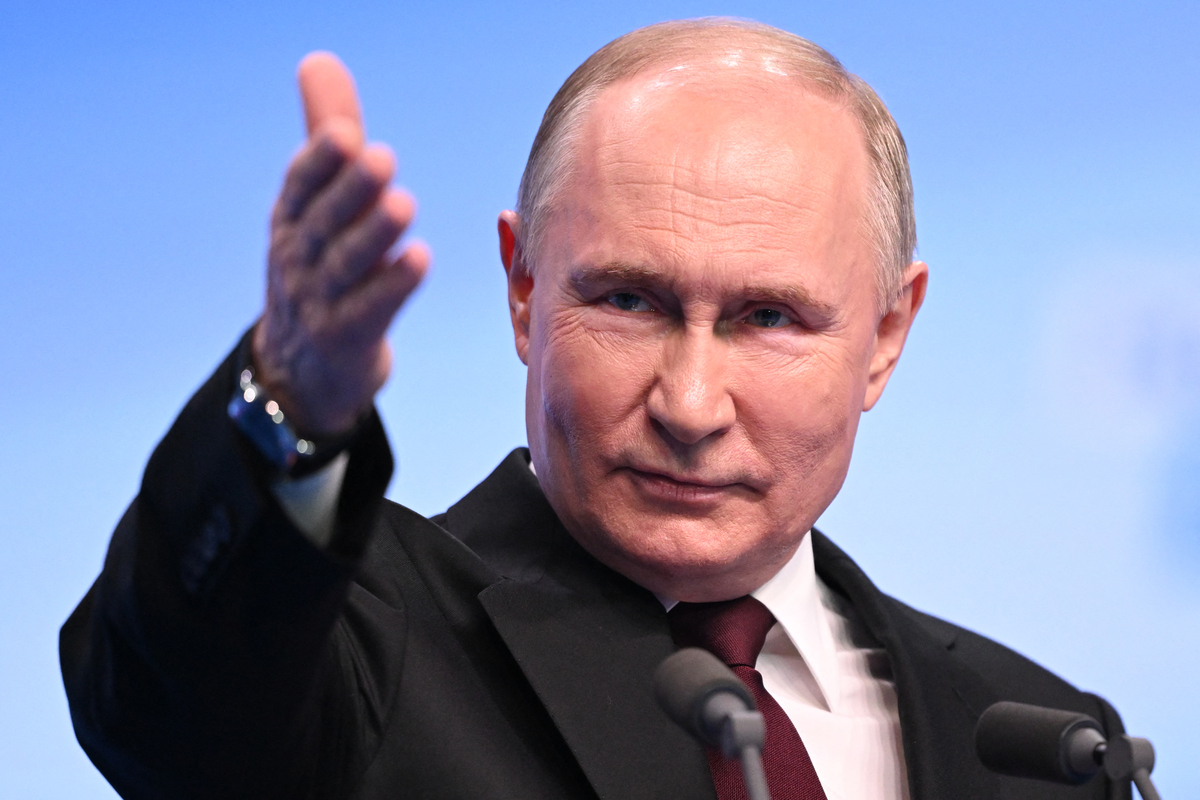
Putin says Russia is “ready to work with Europeans” if they “reorient themselves” and guarantee “lasting and stable cooperation, free of political considerations.”
Russian president Vladimir Putin declared on Monday his willingness to supply oil and gas to European countries, if they signal support for “sustainable and stable cooperation” with Moscow, amid rising prices driven by the Middle East war.
“We are ready to work with Europeans, but we need them to give us indications that they are prepared and willing,” Putin said at a government meeting dedicated to the situation in the hydrocarbons market.
“If European companies, European buyers, suddenly decide to reorient themselves and guarantee us lasting and stable cooperation, free of political considerations […] We have never refused,” he added.
For years, Russia was one of the main suppliers of oil and gas to EU member states, particularly Germany and Eastern European countries, before most of them moved away from Russian hydrocarbons following the start of Russia’s war in Ukraine on February 24, 2022.
Russia’s hydrocarbons sector is subject to multiple Western sanctions, and two of its main export pipelines to Europe are currently out of service: the Nord Stream pipelines, sabotaged by a Ukrainian commando unit in 2022, and the Druzhba pipeline, which crosses Ukraine, damaged in January this year by a Russian air strike and at the centre of a standoff between Kyiv, Budapest and Bratislava.
Read more: EU to invest €200 million in nuclear energy and avoid vulnerabilities
From 2022 onwards, Russia redirected a portion of its exports to other markets, including India, Turkey and China.
On Europe, Putin assured that Russia will continue to supply Hungary and Slovakia in any case, describing them as “reliable partners.”
Oil prices have surged since the start of the US and Israeli campaign of massive strikes against Iran, which has also impacted Gulf exporting countries. On Monday, oil surpassed $100 (€86.31) per barrel.
