

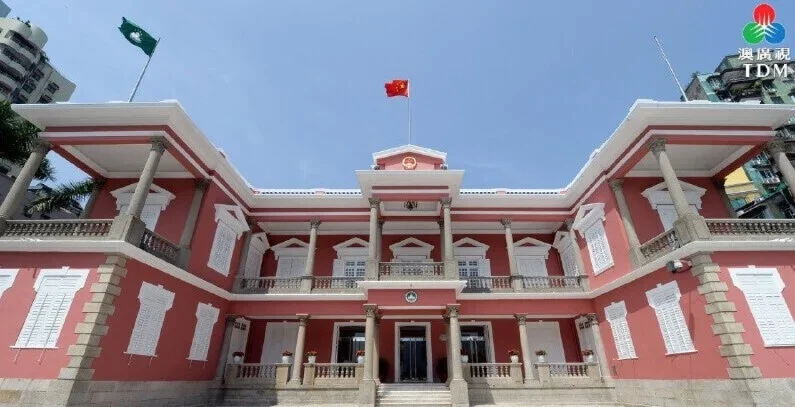
In a strongly worded statement, the Macao Special Administrative Region (MSAR) government said it “firmly opposes” what it described as “unfounded allegations” made in the Congressional-Executive Commission on China’s 2025 annual report.
Macau has “faithfully implemented the ‘One country, two systems’ framework” since the 1999 handover, the government said, arguing that the city has enjoyed sustained economic growth, social harmony and rising living standards.
Authorities stressed that Macau’s judiciary is independent and impartial, and that residents continue to enjoy “ample freedoms,” including those of expression, the press, religion and movement. The MSAR again called on the U.S. body to “abandon its bias” and stop using human rights “as a pretext to interfere” in what it calls China’s internal affairs.
The CECC report, however, presents a more critical picture, warning that Macau’s civic environment has contracted over the past year and that political space has narrowed in parallel with Beijing’s tightening approach in Hong Kong.
The commission points to President Xi Jinping’s high-profile visit to Macau in December 2024 to mark the 25th anniversary of the handover, which was accompanied by sweeping security restrictions that disrupted local transport and city operations. A media outlet later removed a report on shutdowns during the visit and offered no explanation on whether officials had intervened.
Activists — including some who no longer live in Macau — reported receiving warnings not to issue comments considered “inharmonious” during Xi’s trip, a trend the CECC says reflects efforts to prevent critical speech even beyond the city’s borders.
During the same visit, Xi oversaw the installation of Sam Hou Fai as Macau’s new chief executive. Sam, the sole candidate in the leadership race, previously headed the Court of Final Appeal and handed down rulings described by the commission as limiting key freedoms.
The CECC says these developments point to an “increasingly controlled political environment,” where media and civil society operate under greater scrutiny and open criticism of the authorities has become more sensitive.
While Macau has avoided the large-scale unrest seen in Hong Kong, the commission argues that the use of pre-emptive pressure and the narrowing of public space indicate a shift toward a more restrictive model that prioritises stability and security.
According to the CECC, Macau’s trajectory suggests closer alignment with Beijing’s governance priorities as the city enters the next phase of the post-handover era.
