

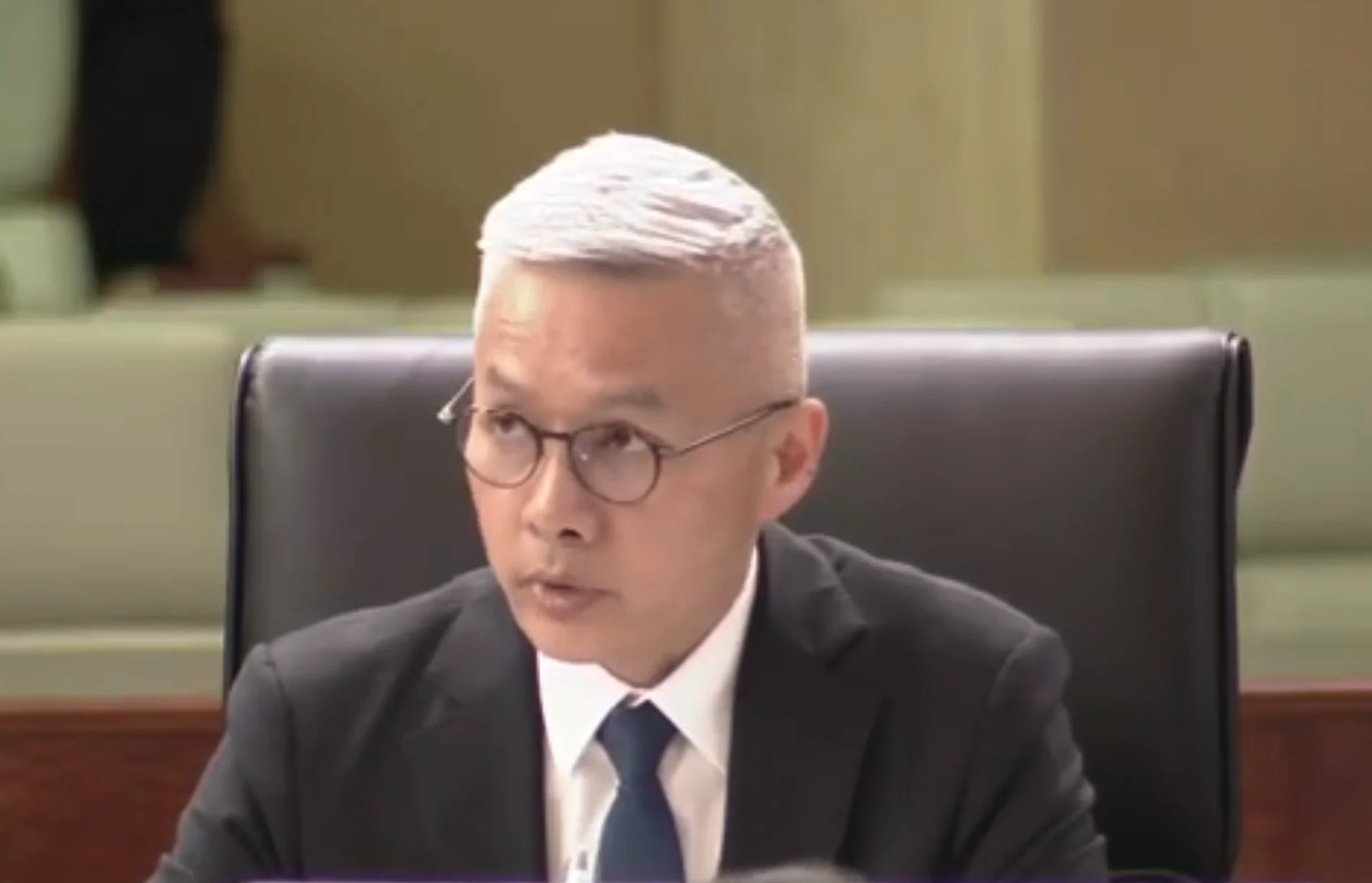
Presenting the economic and financial policy guidelines at the Legislative Assembly, Tai said Macau’s recovery in 2025 had been steady, supported by tourism, emerging industries and a stable financial system. But he stressed that challenges remain.
“The global economic structure is undergoing fundamental changes, with rising uncertainty and instability,” Tai told lawmakers. “As a highly open and externally oriented micro-economy, Macau will continue to face persistent external challenges.”
He said some neighbourhoods and sectors have been recovering “at a relatively slow pace” and that long-standing structural issues—such as the limited scale and competitiveness of emerging industries—still “require further improvement”.
Tai reiterated that accelerating adequate economic diversification remains the government’s top priority. “This is the unavoidable path for Macau to respond to external uncertainties and achieve long-term prosperity and stability,” he said.
The government will concentrate resources on the “1+4” diversification framework—tourism and leisure as the core driver, complemented by big health, high technology, modern finance and MICE and commerce—while strengthening business attraction efforts and launching a planned public industrial fund.
On tourism, the government will deepen promotion in mainland China while pushing to expand Southeast Asian and Northeast Asian markets, with Tai underlining Macau will “further consolidate its position as a World Centre of Tourism and Leisure”.
At the same time gaming concessionaires will be strictly supervised to ensure compliance with gaming and non-gaming investment pledges, saying authorities would conduct a “global assessment” of their contractual commitments.
New push for TCM, digital finance and sci-tech sectors
Tai highlighted plans to advance traditional Chinese medicine (TCM) and big-health industries, including support for commercialising more TCM products and modernising local pharmaceutical factories. Portuguese-speaking countries will remain key partners for the sector’s internationalisation.
In finance, the government aims to attract external investment funds through new tax incentives, expand the bond market and wealth-management business, and accelerate research on a proposed “Macau digital currency”.
Tai also pledged stronger support for high-tech enterprises and the construction of the Macao International Science and Technology Industry Centre at the city’s new industrial park.
The government will maintain its long-running cash-sharing scheme and continue tax relief for individuals and businesses in 2026 while extending utility subsidies for residents. “Safeguarding and improving people’s well-being is the fundamental goal of economic development,” he said.
As announced by Chief Executive Sam Hou Fai previously, stamp duty will be waived for qualified residents buying homes valued up to MOP 6 million, and mortgage rules will be eased to support buyers, while the government also plans broader SME aid, including brand-building support and incentives to encourage spending in local neighbourhoods.
Local employment will remain a priority, Tai said. “Whenever local residents are capable and willing, they must be hired first,” he told lawmakers, adding that job-matching, skills training and youth-internship programmes will be strengthened.
Hengqin development enters key phase
Tai described 2026 as a “crucial year” for the second phase of the Guangdong-Macao In-Depth Cooperation Zone in Hengqin, stating the SAR would work closely with Guangdong to accelerate joint business attraction, improve living conditions for Macau residents in Hengqin, and draw more domestic and international talent to the Zone.
He also pledged deeper alignment with national development strategies, including expanding cooperation with mainland provinces, pushing “one test, multiple certificates” professional accreditation schemes and strengthening Macao’s role as a platform for China–Lusophone cooperation.
Concluding his address, Tai said Macau’s economy is shifting from post-pandemic recovery to a phase of higher-quality development.
“We will consolidate the hard-won results of economic recovery and promote new breakthroughs in industrial diversification,” he said. “With innovative thinking and pragmatic measures, we will create a more prosperous and stable future and open a new chapter in the practice of ‘One Country, Two Systems’ with Macau characteristics.”
