

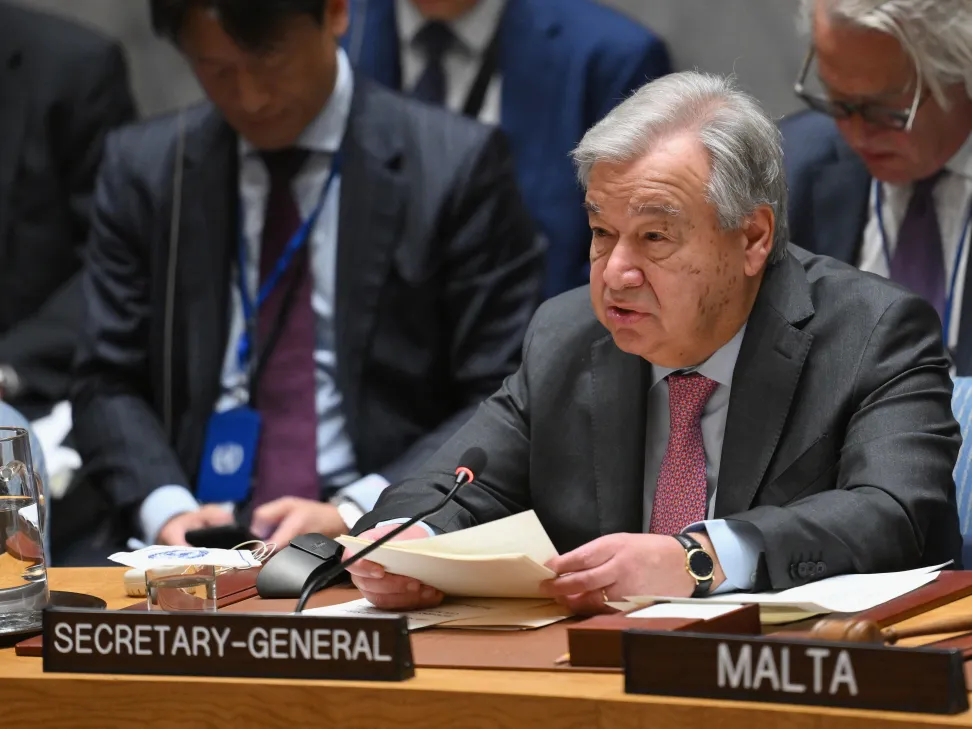
“Fossil fuels continue to receive enormous public subsidies. Many companies are making record profits at the cost of climate devastation, spending billions on lobbying, misleading the public, and obstructing progress. And too many leaders remain hostage to these entrenched interests. Many countries lack the necessary resources to adapt and are excluded from the transition to clean energy,” Guterres lamented.
At the opening of the plenary session of the Climate Summit in Belém, Guterres called on the nations gathered to agree on a “bold and credible” response plan to “close the ambition gap” between national emission reduction plans and the goal of keeping global warming below 1.5 °C.
“This requires maximizing renewable energy and energy efficiency, building modern grids and large-scale storage systems, halting and reversing deforestation by 2030, reducing methane emissions, and setting timelines for phasing out coal in the short term,” emphasized the UN Secretary-General.
“Every dollar spent subsidizing fossil fuels is a dollar diverted from our health and our common future,” he stated, highlighting that investing in fossil energy is “self-destructive for humanity and for economies themselves.”
Guterres added that world leaders gathered for COP30 must present a “clear and credible roadmap” to achieve the necessary funding, and in this regard, developed countries must “lead” the mobilization of these resources by providing accessible and predictable financing at the agreed scale.
Lastly, he argued that developing countries must leave Belém equipped with a “climate justice package” that ensures “equity, dignity, and prosperity.” António Guterres was the first speaker at the summit, which includes around 60 heads of state and government along with other high officials from the 190 represented countries, according to Bloomberg.
Present at the summit, where Portugal is represented by Prime Minister Luís Montenegro, are the presidents of Brazil, Luís Inácio “Lula” da Silva; Chile, Gabriel Boric; Colombia, Gustavo Petro; and France, Emmanuel Macron, as well as the leaders of Spain, Pedro Sánchez; Germany, Friedrich Merz; and the UK, Keir Starmer.
Notable absences include Chinese President Xi Jinping, Indian Prime Minister Narendra Modi, and U.S. President Donald Trump, who chose not to attend a conference aimed at addressing the climate crisis, which he has referred to as “a hoax.”
The official withdrawal of the United States from the Paris Agreement will be formalized on January 27, 2026, one year after Trump made that decision shortly after taking office.
Platform with Lusa
