

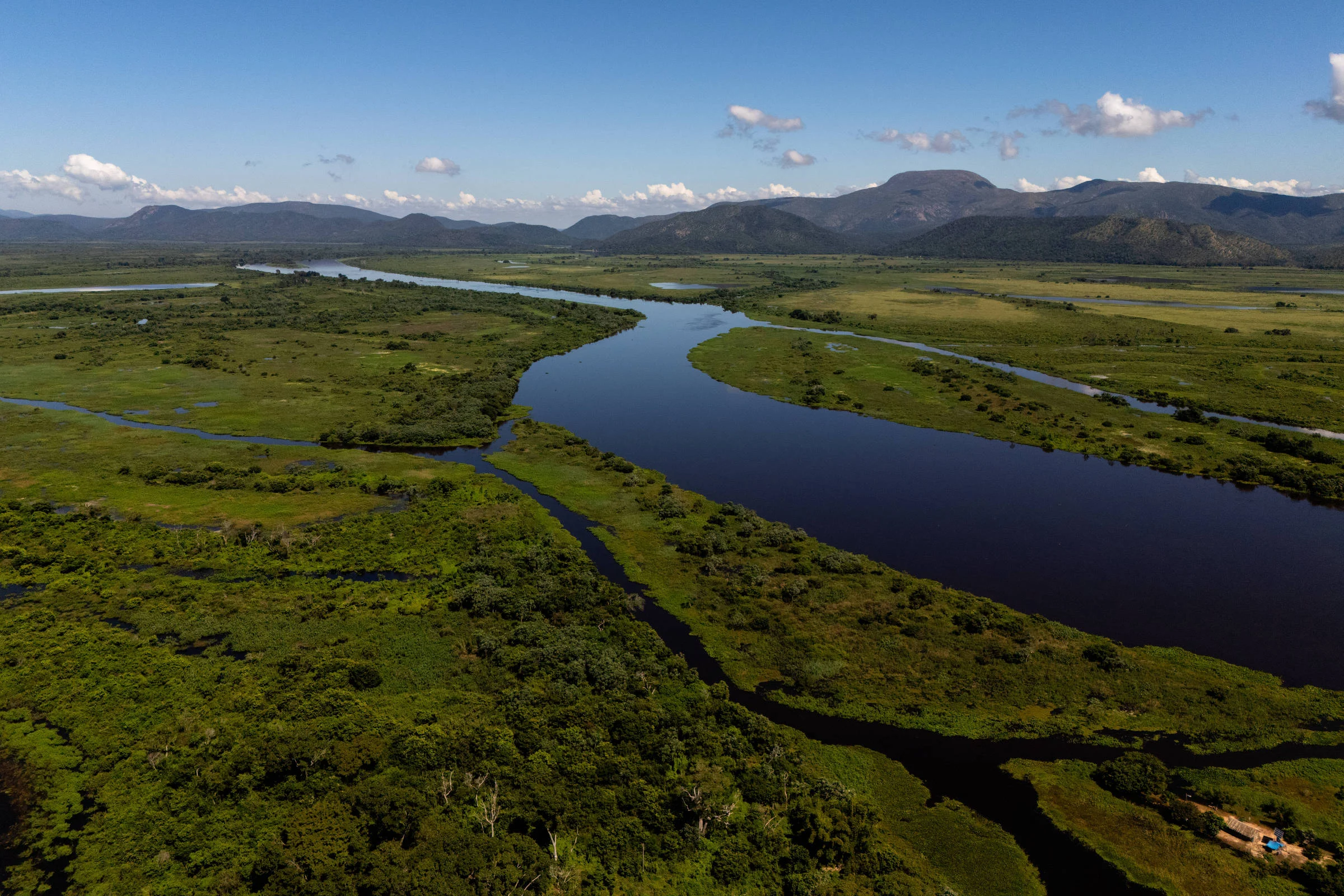
The Jaguar Rivers Initiative aims to create ecological corridors spanning 2.5 million km² in a biodiversity hub that extends across Brazil, Argentina, Bolivia, and Paraguay.
The project seeks to bring back key species, strengthen local communities, and encourage the creation of protected areas, both public and private, within the Paraná River basin. The idea is to use the Paraguay, Iguaçu, Paraná, Pilcomayo, and Bermejo rivers and the forests surrounding them as connectors where animals can move and find refuge.
The project divides the territory into four categories: “arks” (cores of protected areas with very high biodiversity), buffer zones (where sustainable activities such as adapted cattle ranching can be developed), “trampolines” (habitat fragments every 150 km for species dispersal), and rivers with their wetlands.
The covered area will be 1.2 million km² in Brazil, concentrated in the Pantanal in Mato Grosso do Sul and Mato Grosso, and in the Atlantic Forest in Paraná —a region where jaguars are critically endangered.
Although the jaguar is the symbol of the project, the goal is to restore biodiversity as a whole. Other key species include giant otters, tapirs, marsh deer, and seed-dispersing birds, which are essential for habitat regeneration.
“It is also important to involve the local population, whether Indigenous peoples or riverine communities, and create a nature-based economy, with ecotourism or other activities, so that these populations benefit from the initiative,” stresses Mário Haberfeld, founder of the NGO Onçafari.
