

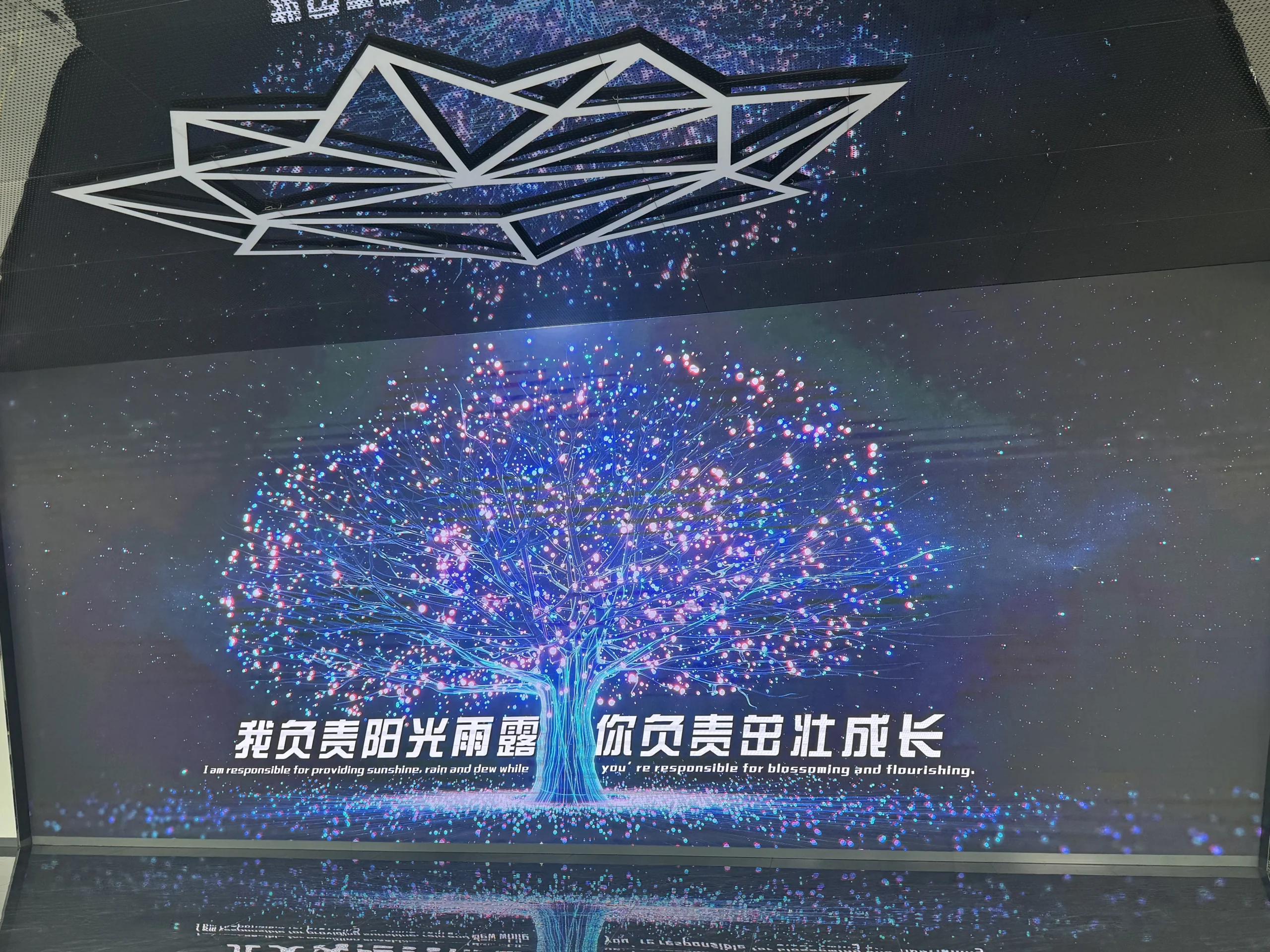
The Hangzhou West Science and Technology Innovation Corridor, a vast high-tech zone stretching across the western region of this city in Zhejiang Province, is being touted as China’s next major innovation hub. Supported by the central government and driven by some of the country’s largest tech companies and academic institutions, this corridor is a key pillar in Beijing’s strategy to reduce reliance on foreign technology. Nicknamed the “Chinese Silicon Valley” by local authorities, the corridor brings together research and development centers, elite universities, and hundreds of startups in an integrated ecosystem.
The project was presented to a delegation of journalists from Macau, who, during a trip to Zhejiang organized by China’s Ministry of Foreign Affairs, visited the Future Science and Technology City. Covering around 128 square kilometers, the Future Science and Technology City in Yuzhang District is the main area of the Corridor and one of China’s “four national future technology centers.”
“The Science City is located in a crucial axis of the Yangtze River Delta, near Hangzhou and Shanghai, an area that is already among the most dynamic in terms of technological development in the country,” says Chris Cui, spokesperson for the exhibition center. “Since its founding in 2023, the Science City has already helped create 1,022 companies in areas such as AI, IoT, and bioscience,” he adds.
The area is home to internet giant Alibaba; fintech group Ant Group; some of the country’s leading artificial intelligence research institutes; and renowned educational institutions such as Zhejiang University, one of China’s top engineering schools, and Westlake University, a private cutting-edge research institution. Companies such as OPPO, VIVO, and surveillance giant Hikvision have also established R\&D centers in the region.
The area includes research institutes and incubators such as Zhejiang Lab and Liangzhu Lab, Dream Town, and AI Town, which support a growing network of startups. Dream Town, for example, is home to more than 500 early-stage startups in AI and fintech, while AI Town concentrates more than 200 startups specializing in machine learning, robotics, and medical technology.
Old and new faces
The explosive growth of this tech city owes much to its most famous tenant – e-commerce giant Alibaba, whose headquarters dominate the landscape. However, a group of ambitious startups, dubbed the “Six Little Dragons of Hangzhou” by the Chinese tech community, is injecting new energy into the country’s innovation scene. Leading the movement is DeepSeek, an AI startup that quickly gained global recognition for its large-scale, low-cost language model, already adopted by industry giants such as Microsoft, Nvidia, and Alibaba.
In the gaming world, Game Science stands out as the creative force behind Black Myth: Wukong, a video game based on the 16th-century Chinese novel “Journey to the West” that has sold over 25 million copies worldwide – a significant milestone for China’s video game industry. Meanwhile, the robotics innovations of Unitree and DeepRobotics have also attracted attention, with Unitree’s dancing robots featured in the MGM Cotai’s 2049 show.
In the field of neurotechnology, BrainCo stands out as a pioneer in brain-computer interfaces, while ManyCore Tech, specializing in spatial intelligence solutions, recently became the first among these six emerging companies to file for an initial public offering on the Hong Kong Stock Exchange.
Concentrating talent
At the heart of Yuhang District’s success is its ability to attract local and foreign talent through subsidies and streamlined visas in the Technology City.
“At present, there are about 67,000 professionals working in 585 companies in the Technology City alone. We also have many young Chinese graduates from top universities abroad who end up returning and settling in the City,” highlights Cui.
“Top-performing recent graduates from China’s best universities can receive support to develop projects and rent space for their companies at no cost for three years,” he explains.
“For example, Hangzhou offers a talent policy designed to attract and retain highly qualified foreign professionals. This policy includes simplified visa processes, such as the R (Talent) visa, which can be multiple-entry and valid for 5 to 10 years, with procedures completed in about 10 working days,” notes Cui. These measures have helped attract around 3,000 professionals and over 50 academics from abroad.
The proximity of Zhejiang University, one of China’s leading academic institutions, also helps ensure a steady flow of talent in engineering and technology.


