

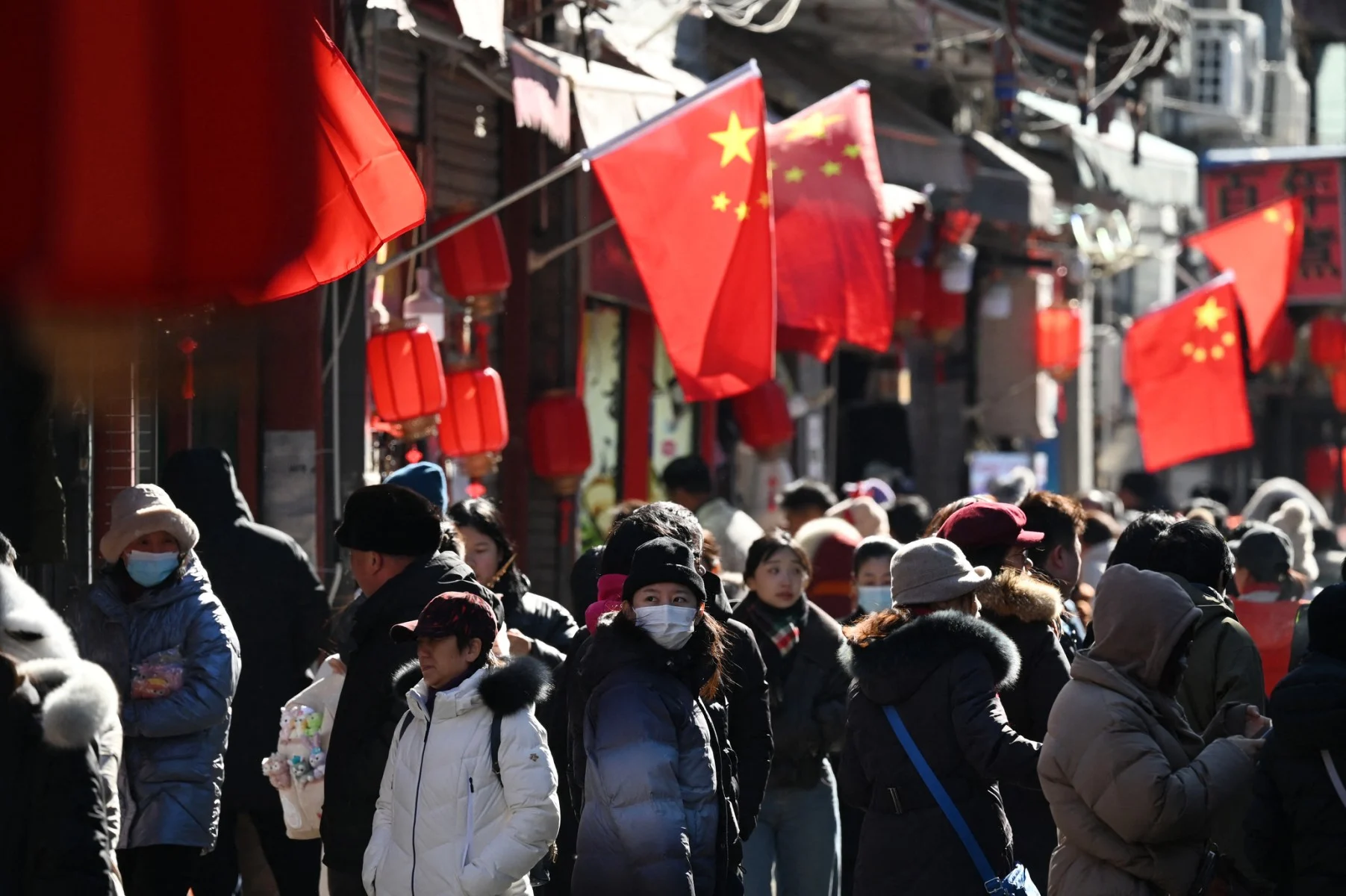
The Chinese New Year, also known as the Lunar New Year or Spring Festival, remains one of the most important traditional celebrations in China, with roots tracing back to agrarian rituals of the Shang Dynasty (c. 1600–1046 BCE), approximately 3,500 years ago
Rooted in the ancient lunar calendar and shaped by dynastic change, the festival blends myth, ritual, family reunion, and national identity into a 15-day celebration that continues to define the cultural calendar of China and Chinese communities worldwide.
Although China officially adopted the Gregorian calendar in 1912, establishing January 1 as the start of the civil year, the Lunar New Year has endured as the country’s most significant traditional holiday.
From Lunar Phases to Imperial Order
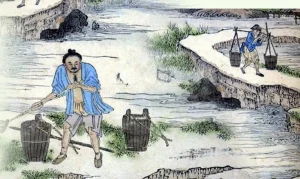
Farmers work the fields in an illustration depicting agrarian life during ancient dynastic China, reflecting the agricultural rhythms that shaped the origins of the Lunar New Year. (Illustration of the Academy of Chinese Studies)
The earliest recorded forms of the Chinese lunar calendar date back to the 14th century BC, during the reign of the Shang Dynasty. The calendar functioned not only as a timekeeping system but also as a guide to religious, political, and social events. Its structure evolved according to dynastic rule, aligning lunar phases with solar solstices and equinoxes.
Traditionally, the New Year begins with the new moon that falls between late January and late February and concludes 15 days later, on the full moon, marked by the Lantern Festival.
Rooted in a civilisation shaped for centuries by agriculture, the celebration marked the end of winter and the beginning of spring, a moment when farmers paused from their work, cleaned their homes and fields, and prepared to plant new crops.
During the Zhou Dynasty (1046–256 BC), it became customary to offer sacrifices to ancestors and deities at the turn of the year, seeking blessings for harvest and prosperity. By the Han Dynasty (202 BC–220 AD), Emperor Wu’s Taichu Calendar (104 BCE) standardised the lunar calendar, establishing the first day of the first lunar month as the start of the New Year—a date that falls between late January and mid-February in the Gregorian calendar.
The Legend of Nian and the Birth of Red
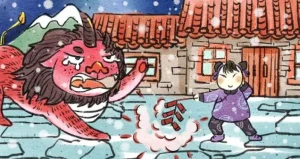
A child sets off firecrackers to scare away the mythical beast Nian during Lunar New Year.
One of the most enduring myths associated with the festival is that of Nian Shou (“Year Beast”), a mythical creature said to appear on New Year’s Eve to devour livestock, crops, and even villagers.
According to legend, a mysterious elderly man revealed that the beast feared the colour red and loud noises. Villagers began decorating their homes with red lanterns, wearing red garments, and setting off bamboo firecrackers to ward off the evil monster. The creature never returned, and the tradition endured.
Interestingly, the character ‘Nian’ (year) originally depicted a person carrying ripe grain in oracle bone script, meaning ‘harvest’, a concept naturally tied to the annual agricultural cycle. The folk legend of the Nian beast likely emerged later, retroactively linking the word for ‘year’ to a mythical creature that embodied the dangers of the seasonal transition.
From Ritual to Festivity
People light firecrackers during the celebrations of the Chinese New Year in Macau on January 26, 2023. (Photo by Eduardo Leal / AFP)
By the Wei and Jin dynasties (220–420), the New Year celebration gradually shifted from a solemn ritual to a social gathering. Families cleaned their homes, shared elaborate meals, and stayed awake through the night to welcome the new year.
During the Tang, Song, and Qing dynasties, customs became increasingly similar to modern practices. Firecrackers, family visits, dumplings, and public performances such as dragon and lion dances became widespread. During these dynasties, the festival was known as ‘Yuandan’ or simply the New Year. It was only in the early 20th century that it was officially renamed the ‘Spring Festival’ to distinguish it from the Gregorian New Year.
Chinese New Year Traditions That Endure
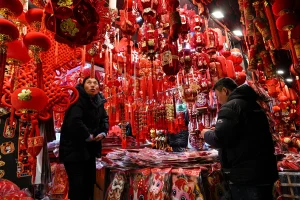
A vendor arranges decoration items for Chinese New Year next to Yu Garden at his shop in Shanghai on January 21, 2026. (Photo by Hector RETAMAL / AFP)
Despite modern additions such as online shopping festivals and nationally televised gala shows, many core traditions remain unchanged. Red lanterns, red clothing, and firecrackers trace their origins to the legend of Nian. Red is widely associated with good fortune and protection against misfortune.
One popular folk explanation links red envelopes to a tale about warding off an evil spirit named Sui (祟), with ‘yasui qian’ (money to suppress Sui) later evolving phonetically into ‘yasui qian’ (money for the new year). While this story is widely told, historical records suggest the custom evolved gradually from earlier practices of gifting protective coins.
On New Year’s Eve, extended families gather for a reunion dinner. Fish is traditionally served last, symbolising abundance, though it is often left uneaten to represent surplus for the coming year. Long noodles, eaten during the first days of the festival, symbolise longevity. On the fifteenth day, families share round glutinous rice dumplings during the Lantern Festival, representing unity and completeness. But customs vary from place to place.
Read More: China’s youth reinvent Chinese New Year traditions
Preparation for the New Year begins with a thorough cleaning of homes to sweep away bad luck from the previous year. Doorways are adorned with scrolls bearing auspicious messages, and offerings may be made to ancestors.
While the format of the celebration has evolved over centuries, influenced by dynastic change, political shifts and economic development, the core values of renewal, family unity, and hope for prosperity remain unchanged.
More than a festival, the Lunar New Year continues to serve as a cultural anchor, connecting modern China to its ancient past while reinforcing the enduring importance of family, tradition and collective memory.


