

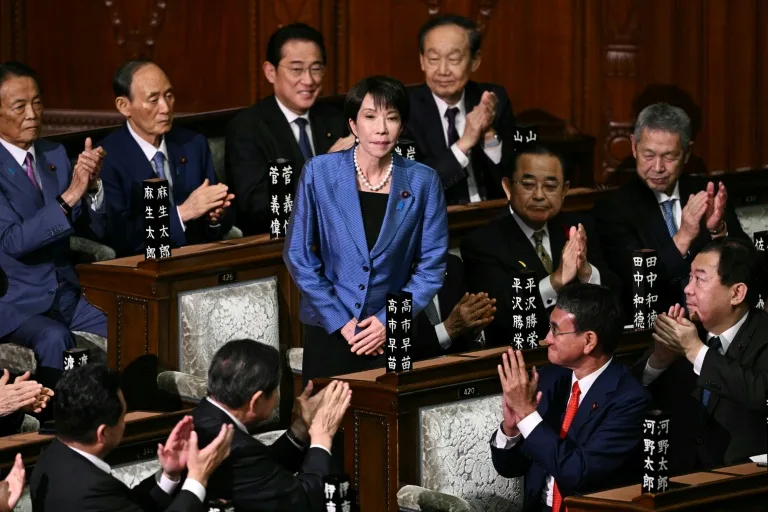
The election was held just four months after Takaichi became leader of the LDP and Japan’s first female prime minister. She sought a strong public mandate following a turbulent period for the ruling party, which had lost its parliamentary majority under her two predecessors amid corruption scandals and rising living costs.
Calling an early election was widely seen as a political gamble, particularly after the collapse of the LDP’s long-standing coalition with the Komeito party. However, Takaichi’s personal popularity appears to have bolstered the party’s fortunes, with government approval ratings remaining above 70% in recent months.
The vote took place under severe winter conditions, with many voters braving snow and freezing temperatures in the country’s first mid-winter election in 36 years. Japan’s transport ministry reported widespread disruption, including the closure of 37 train lines, the suspension of 58 ferry routes and the cancellation of 54 flights. Rare snowfall was also recorded in Tokyo as voters headed to polling stations.
Cost-of-living pressures and political scandals featured prominently in voters’ concerns. “People want their lives to be better and more comfortable. We are not used to inflation, so there is a lot of anxiety,” Tokyo voter Ritsuko Ninomiya told the BBC, calling for long-term solutions rather than short-term measures.
Takaichi’s energetic campaign, populist spending pledges and nationalist rhetoric appear to have mobilised sections of the electorate. Critics, including business groups, have questioned whether increased public spending can revive Japan’s sluggish economy, given that the country already carries one of the highest levels of government debt among developed nations. Her conservative stance on immigration has also drawn criticism in an ageing society facing labour shortages.
The opposition entered the election more united than in the past. The LDP’s former coalition partner Komeito joined forces with the Constitutional Democratic Party of Japan, forming the largest opposition bloc in the lower house.
Foreign and defence policy also influenced the campaign. Takaichi has cultivated a close relationship with US President Donald Trump, who has publicly endorsed her — an unusual move for a sitting US president. Both leaders have argued for increased defence spending by Japan, raising concerns among some voters about how to balance military expenditure with everyday living costs.
Official results are expected later, but early indications suggest that Prime Minister Sanae Takaichi has emerged from the snap election with a strengthened mandate and a commanding parliamentary majority.
