

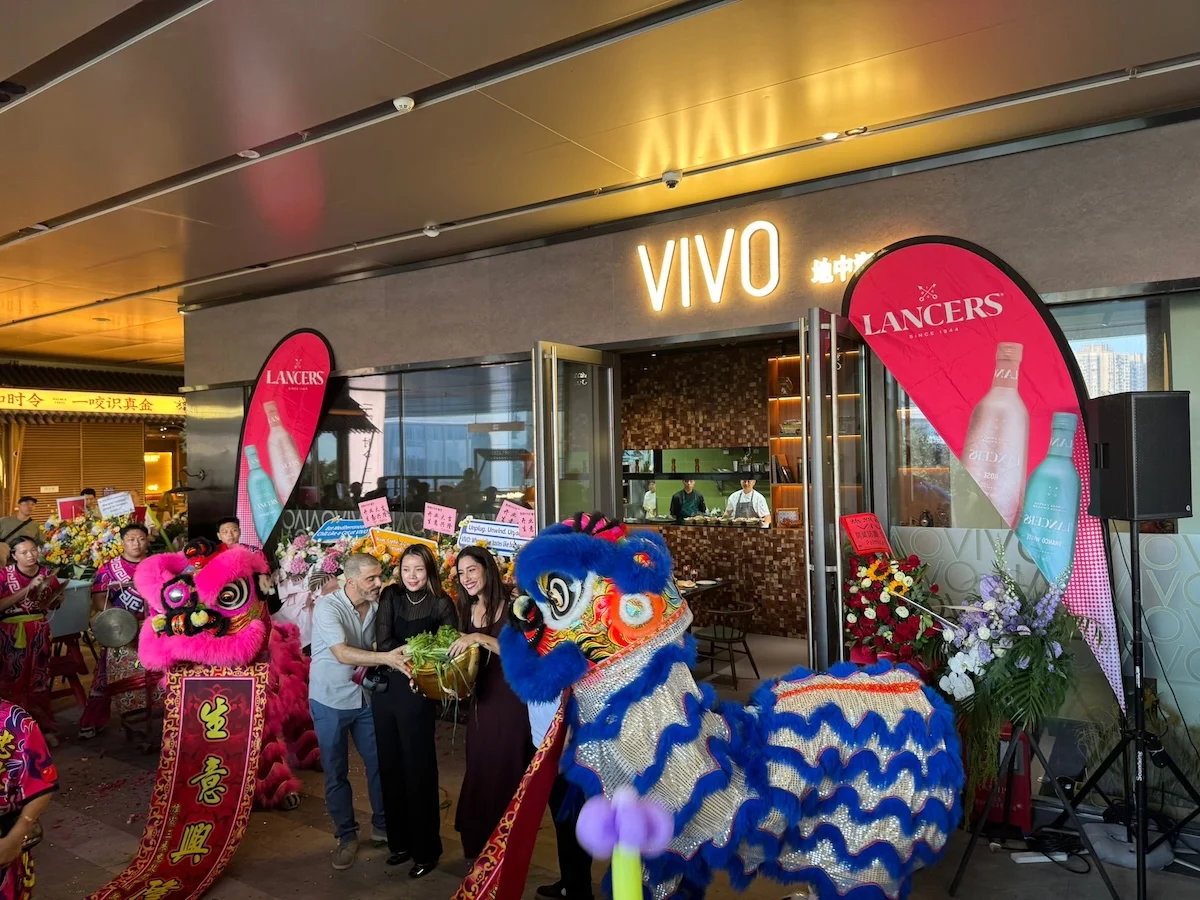
Located in the Huafa shopping center in Hengqin, at the border with Macau, the restaurant Vivo is a venture by two Portuguese who saw an opportunity to connect two regions—China and Southern Europe.
This is not a fusion cuisine restaurant. However, it features several culinary traditions: Portuguese, Spanish, and Italian, prepared by a Shanghai chef using Chinese ingredients. “We are in China, and we want to focus on fresh Chinese products,” says one of the partners, João Maria Pegado, to Lusa.
Currently, the traditional “polvo à lagareiro” (octopus dish) is not on the menu as they are still searching local markets for the ideal product, Pegado explains.
“We could get frozen octopus from Macau, but our main goal is to work with fresh products in China. It makes it much more cost-effective, but we also want to blend Chinese ingredients with Portuguese dishes,” he adds.
Vivo has been in ‘soft opening’ mode since July 18. Despite the language barrier, Pegado does not complain about the journey so far.
He plans to soon apply for support from the Macau government as authorities encourage investment in the Deep Cooperation Zone of Macau-Guangdong in Hengqin, a special economic area created in 2021 aimed at economic diversification and regional integration.
Hengqin is increasingly attracting visitors from Macau, the investor notes. In this area managed by both sides of the border, for example, Macau drivers are allowed to circulate after applying for a permit.
There are other attractions as well: gasoline is cheaper—”Macau cars come to fill up on weekends; we feel like we’re in Badajoz”—and supermarkets offer better prices, along with more space and green areas.
“An open space where you can relax without being in the city. That’s the main reason people choose Hengqin over Macau on weekends, and sometimes even during the week at lunchtime,” he reflects.
Hengqin also seems to be a more economical option for Chinese visitors to Macau, where, according to August data, the average hotel room price is 1,461 patacas (about 156 euros).
“Hengqin has increasingly become a hotspot for overnight stays, used by many visitors. Many buildings originally designed as offices have been licensed by the government to become hotels in the style of Airbnb,” he said.
Currently, most of the restaurant’s visitors come from Hong Kong and Macau, but João Maria Pegado hopes to attract more customers from inland China.
“Few people know what Mediterranean cuisine means,” he notes, adding that for many who have visited Vivo, the black paella has been a popular choice.
Other house specialties include fisherman’s rice, garlic shrimp, and barbecued chicken, lists Pegado, who left a sports career to pursue the restaurant business.
“It’s special,” he admits. “I felt there was a need for a Western-style restaurant that could succeed here. I’ve lived in Hengqin for three years, and I really appreciate this place; it allows me to be close to Macau, the city where I grew up and with which I identify,” he concludes.
Platform with Lusa
