

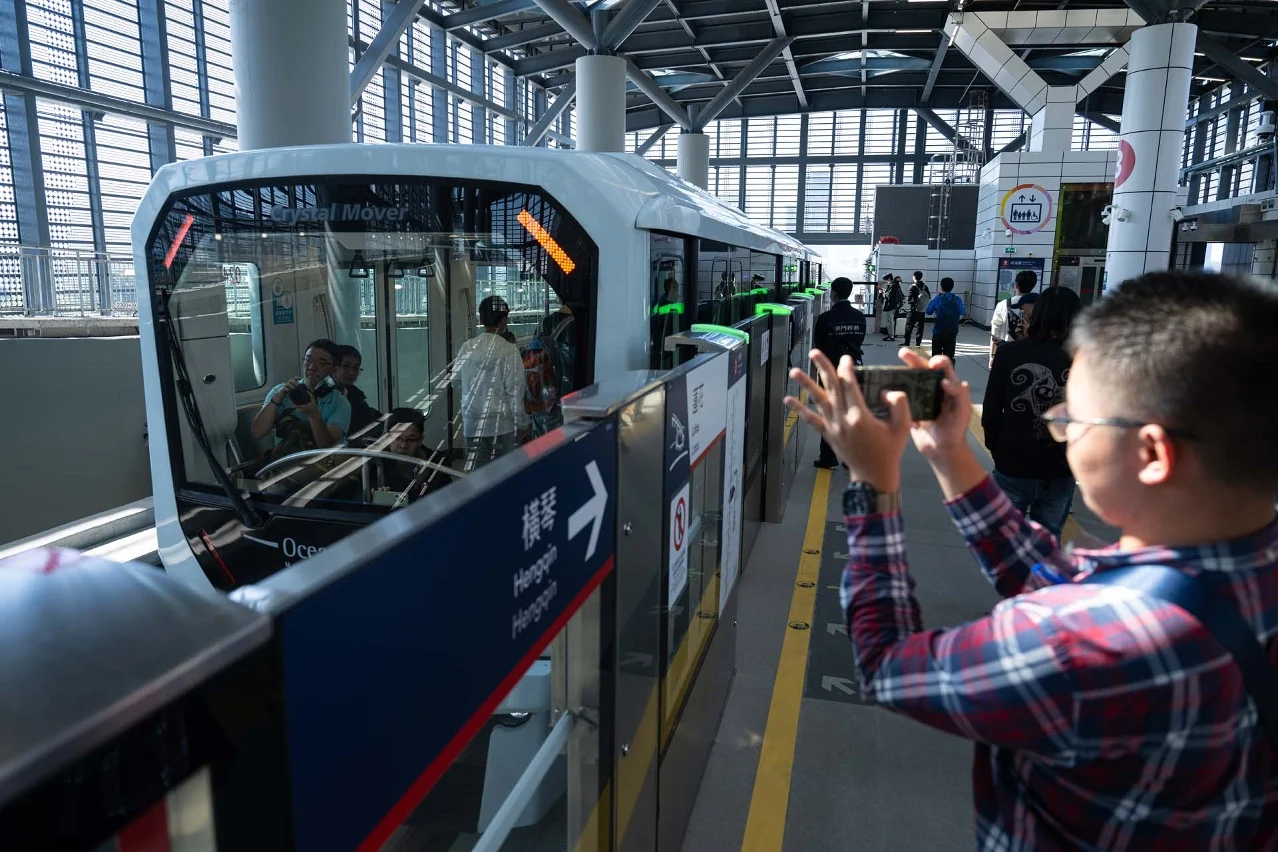
“The strategic issue of the light rail was raised as early as 2009/2010, when land transport planning was carried out, defining the light rail as the main mode. However, to this day, a daily mobility route for citizens to go to work or study has not been established,” Kaleb Lam told PLATAFORMA. For the urban planner, “the proposal failed in terms of communication with the public and coordination with public policies,” which is why “the presentation of this Strategic Study for the Development of the Macau Light Rapid Transit comes a little late.”
The study, presented by the Public Works Bureau (DSOP) and open for public consultation until the end of February, proposes the creation of six new lines, totaling 21.1 kilometers, with virtually full coverage of the city. Most of the new sections will be underground, seeking to reduce the impact on the urban landscape, and the adoption of more modern railway systems is also being considered.
The plan sets out phased interventions over time. In the short term, the Government points to the extension of the East Line to the Qingmao Border Checkpoint, along a fully underground route, and to the expansion of the Seac Pai Van Line, with three new stations designed to serve residential areas and tourist spots. In the medium term come the West Line, along the Inner Harbour, and the South Line, linking Barra to the Hong Kong–Zhuhai–Macau Bridge border checkpoint. The two new lines planned for Taipa are classified as long-term projects.
In the past, many works and construction projects in Macau spoke only of benefits, without mentioning the difficulties that might arise, creating a gap between expectations and reality
Kaleb Lam, urban planner
Despite his reservations about lost time, Kaleb Lam acknowledges the document’s usefulness as a planning instrument. “Any planning aims to give society ‘predictability’. In the past, the Government had a major problem with planning: decisions emerged very suddenly. Now, through the consultation process and the collection of opinions, citizens know where the project will be built and how it will be implemented in the future,” he says.
Even so, the urban planner warns of the need for realistic management of expectations during construction: “In the past, many works and constructions in Macau spoke only of benefits, without referring to the difficulties that could arise, creating a gap between expectations and reality,” advocating greater transparency regarding the technical and time constraints of projects.
Engineer Addy Chan also sees the plan as an opportunity, provided that the improvised solutions of the past are avoided. “This light rail project is an opportunity. If there can be a clear plan, instead of ‘patches’ or improvised solutions, this model is a good direction,” he told PLATAFORMA. Although late, the initiative finally makes it possible to structure a “long-term vision for urban mobility.”
Environmental impact and implementation
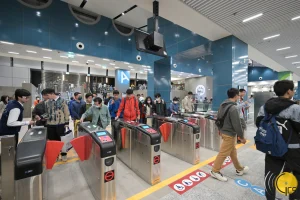
One of the main concerns raised relates to environmental impact, especially in the Alto de Coloane area. Kaleb Lam believes that the predominantly underground alignment reduces visual effects, but warns that the Seac Pai Van Line will run very close to the protected area. “As Rua de Entre-Campos [in the center of Coloane village] is very narrow, this part of the construction may be more difficult,” he explains.
Addy Chan questions the technical options planned for that section: “The Seac Pai Van Line will extend to the Lai Chi Vun Village station and the Panda Pavilion. How will the track and the structure of the urban station be designed?” he asks, adding that “if a bidirectional single-track model can be made narrower, the interference with the hillside will be even smaller.”
Regarding the South Line, Addy Chan has high expectations, especially for the connection between the NAPE station and Zone A of the New Urban Reclamation Areas. “The key point lies in the connection at the NAPE station. If the NAPE station can connect to the Zone A stations and open earlier, I believe it could significantly relieve traffic pressure,” he said. The engineer even advocates the possibility of a phased opening, without waiting for the line’s full completion.
For the manager of the Facebook page “Macau Buses and Public Transport Enthusiastic,” dedicated to monitoring public transport, the South Line is “particularly relevant for allowing the connection of the city’s central area to the light rail” and for facilitating transfers to the Border Gate, the Hong Kong–Zhuhai–Macau Bridge, and Cotai. While supporting the overall set of proposed lines, he “hopes that, in the future, the Central Taipa Line can connect to the fifth link to the Macau Peninsula, strengthening the connection to the urban center.”
The study offers an “integrated vision for the reorganization of areas such as the Inner Harbour,” but Addy Chan warns that the “choice of stations and coordination with the economic revitalization of these areas will be decisive, requiring rigorous management of the expectations created among the population.”
