

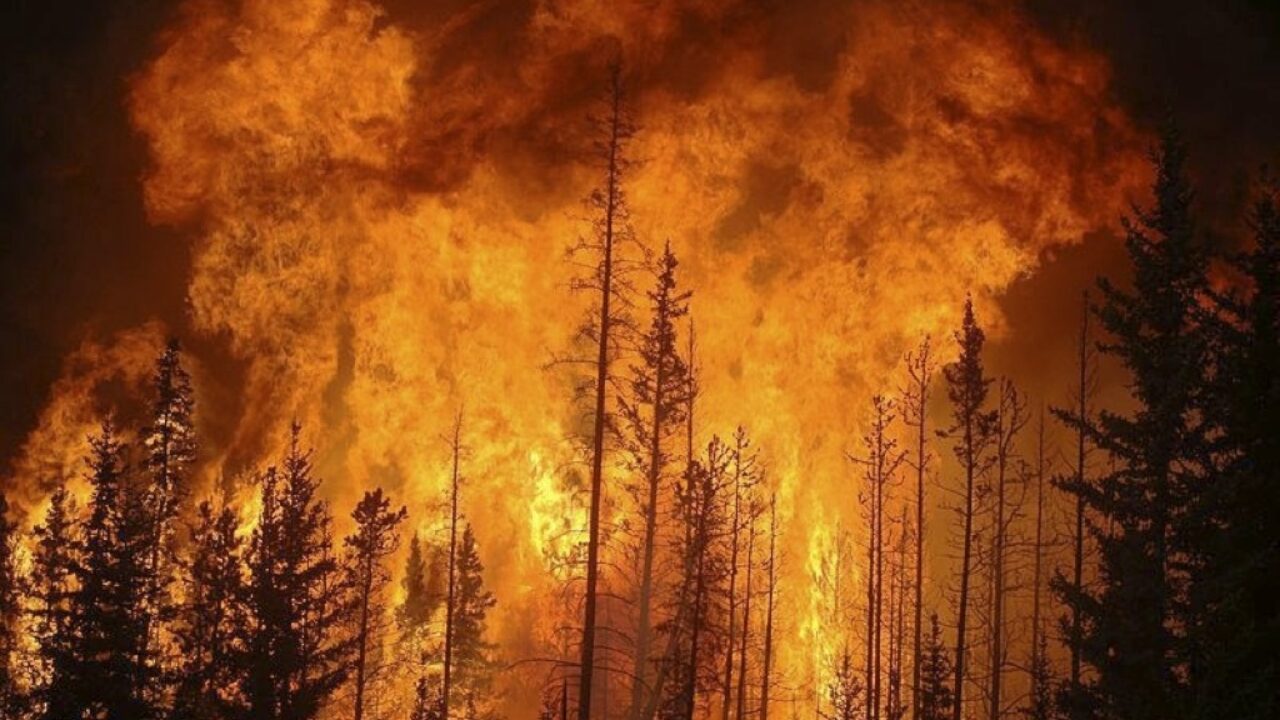
Carbon emissions from wildfires in Canada have now surpassed the national annual record, Europe’s climate observatory Copernicus announced today, as more than 250 wildfires rage unchecked, polluting the air and fueling global warming.
Canada has been battling wildfires since early May in an unprecedented wildfire season, “leading to a total of approximately 160 megatons of carbon emissions, which are now the highest estimated total annual emissions for Canada,” according to the base. data from the Copernicus Atmosphere Monitoring Service (CAMS), dating back to 2003.
The previous record “was around 140 Mt in 2014,” Copernicus told AFP.
Canadian wildfires alone in 2023 now account for more than 10% of global wildfire carbon emissions in 2022 (1,455 megatons).
As emissions continue across the country, the Canadian Interagency Forest Fire Center (CIFFC) listed 494 active fires as of Tuesday, including 259 out of control.
These fires, which have already destroyed 7.7 million hectares according to the CIFFC, are favored by a hot and dry climate that is expected to last until the end of summer, according to forecasts.
Smoke from the fires led to deteriorating air quality in North America and reached Europe on Monday, but the pollutants circulate several kilometers above sea level and are “unlikely” to have an impact on air quality, according to the Copernicus.
