

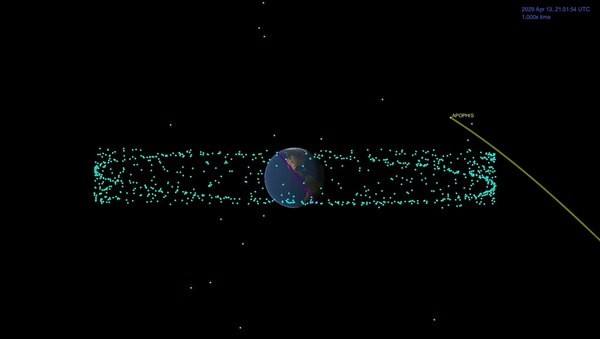
These “space rocks” range from a few meters to several kilometers in diameter and have orbits that bring them close to Earth, approximately 45 million kilometers from the planet’s orbit, close enough for constant monitoring. The first near-Earth asteroid, Eros, was discovered in 1898.
Thanks to telescopes, hundreds of these rocky bodies were discovered in the 1990s and 2000s. This month, the number of identified near-Earth asteroids reached the landmark of 40,000, with about 10,000 discovered in the last three years.
According to the ESA, which has a coordination center for near-Earth objects, approximately 2,000 near-Earth asteroids have a “non-zero” probability of colliding with Earth at some point in the next hundred years. However, the ESA notes that this is unlikely.
The largest, measuring over a kilometer in diameter, are also the easiest to detect, and many were among the first to be found.
These objects would cause global effects if they hit Earth, but the scientific community is confident that the vast majority have already been found,” the ESA states, adding that the focus is “to find and track medium-sized asteroids, between 100 and 300 meters in diameter,” which are “much more difficult to detect and would cause severe regional damage if they struck the planet.”
According to the European Space Agency, “there’s still work to be done,” as current models suggest that only about 30% of these objects have been discovered.
“With the next generation of telescopes coming online, we expect the number of known near-Earth objects to continue to grow at an even faster pace,” said Luca Conversi, who manages the ESA’s Near-Earth Objects Coordination Center.
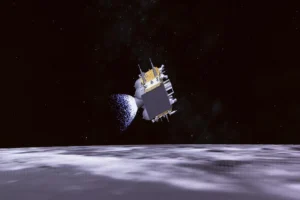
(Xinhua/Jin Liwang)
The European Space Agency has the Hera mission in orbit, which will test whether altering the trajectory of an asteroid, in the case of Dimorphos, is a reliable method to protect Earth.
The ESA expects to launch a mission in mid-2030 that will enable the discovery of asteroids that ground-based optical telescopes cannot capture due to intense sunlight during the day and, for the first time, to detect impact risks similar to the Chelyabinsk event in Russia ahead of time.
On February 15, 2013, unexpectedly, the Chelyabinsk asteroid, measuring 20 meters— the largest to hit Earth in over a century—entered the Earth’s atmosphere over the Ural Mountains in Russia and exploded at an altitude of 30 kilometers, releasing energy equivalent to 35 atomic bombs of Hiroshima.
Just a few minutes later, a shock wave hit the ground, damaging thousands of buildings and injuring about 1,500 people due to flying glass shards.
Although several Russian cities were impacted by the asteroid’s effects, Chelyabinsk was the most affected due to the proximity of the explosion.
